 EN
EN

The Foundation of a Successful Custom Egg Tray Project
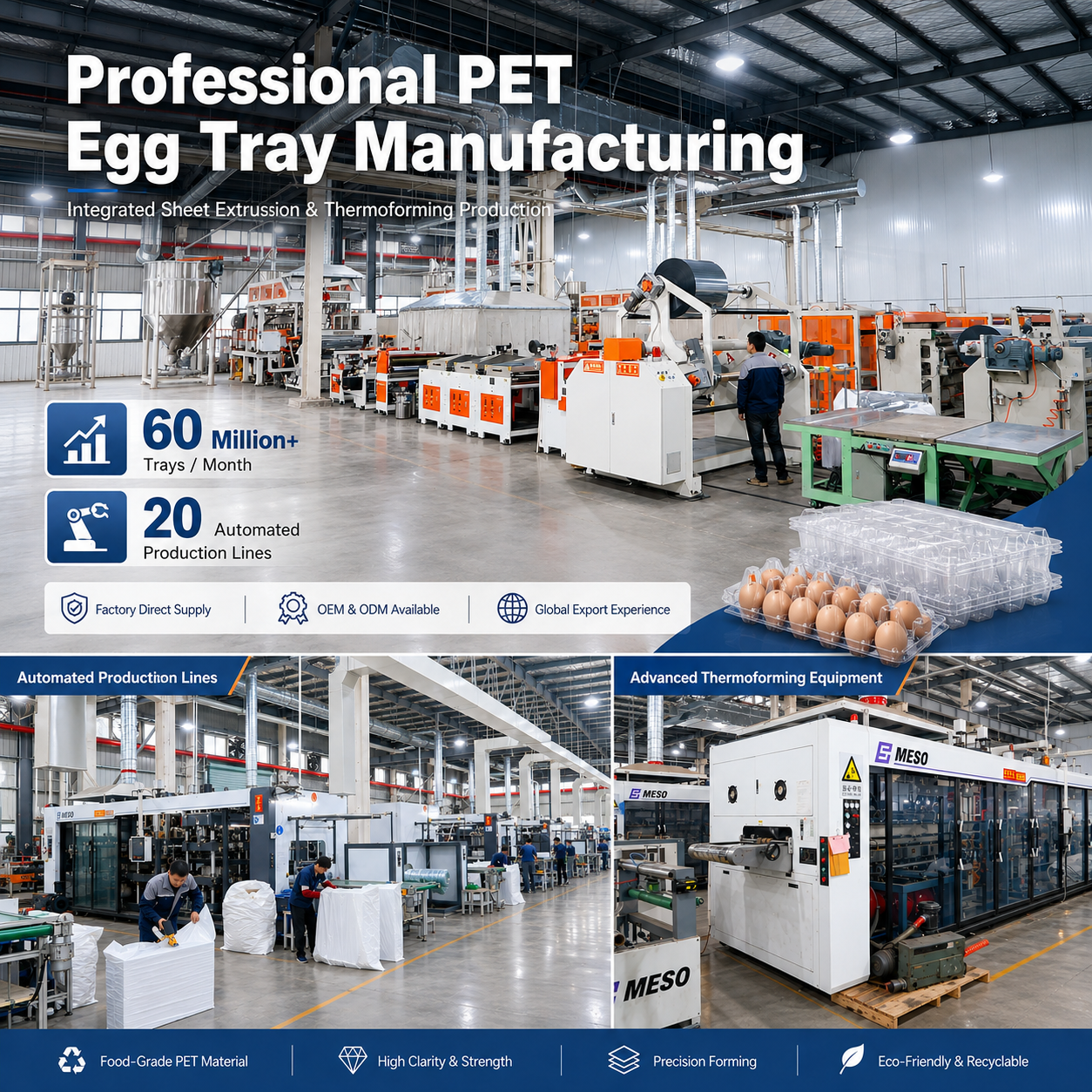
Launching a custom egg packaging initiative involves far more than selecting a tray from a catalog and stamping a logo onto the lid. A truly effective OEM PET egg tray supplier functions as an extension of the buyer’s own engineering and quality assurance teams, bringing together mold design expertise, material science knowledge, production scalability, and export logistics capability in a single, coordinated operation. When a poultry farm, egg distributor, or retail brand decides to invest in custom packaging, the OEM PET egg tray supplier it chooses will determine whether the project delivers a precisely fitted, beautifully branded tray that reduces breakage and builds brand equity, or whether it results in delays, dimensional mismatches, and costly compromises. Why do so many custom packaging projects encounter unexpected hurdles mid-development? The root cause is almost always a supplier that lacks the depth of mold inventory, the technical design support, or the quality infrastructure to translate a buyer’s vision into a production-ready tray. A qualified OEM PET egg tray supplier approaches every project with a systematic methodology that begins with a thorough analysis of the buyer’s egg dimensions, packaging requirements, and market destination, and proceeds through mold selection, sample validation, trial production, and final quality assurance with documented checkpoints at every stage. Selecting an OEM PET egg tray supplier with this level of rigor transforms a procurement transaction into a strategic partnership that yields consistent packaging performance year after year.
Critical Information to Prepare Before Engaging an OEM PET Egg Tray Supplier
Defining Egg Dimensions and Tray Capacity Requirements
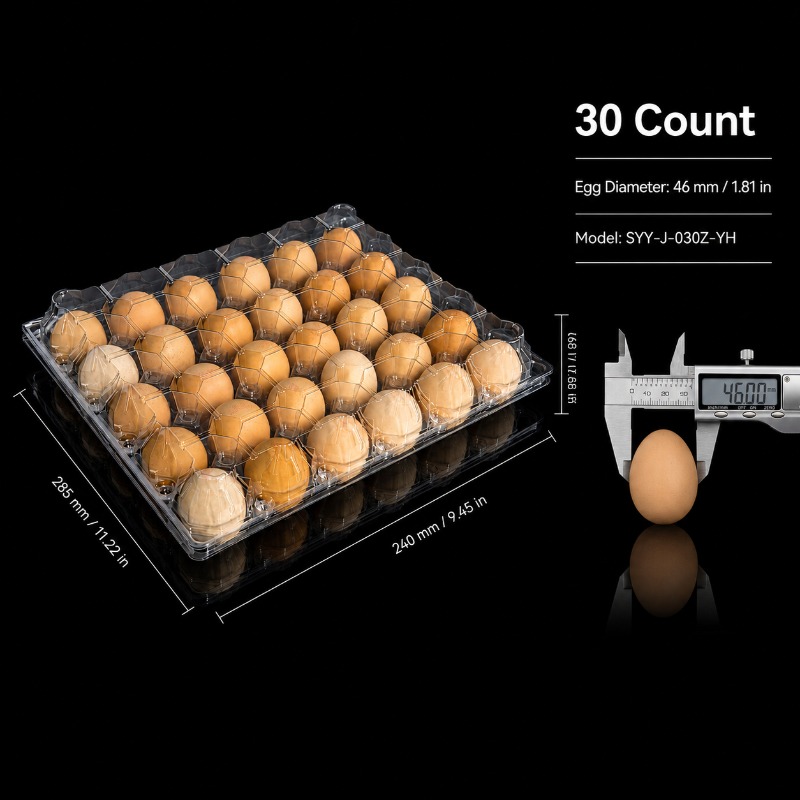
The dimensional profile of the eggs that will be packed is the single most important data point in any custom tray project. An OEM PET egg tray supplier cannot design or recommend a cavity geometry without knowing the average length, equatorial diameter, and weight distribution of the flock’s eggs. Buyers should measure a statistically significant sample drawn from multiple days of production and across different seasons if possible, because egg size fluctuates with temperature, daylight, and the age of the flock. Providing only the nominal grade, such as large or extra-large, introduces ambiguity that can lead to a cavity that grips the eggs too loosely or too tightly. A thorough OEM PET egg tray supplier will also ask about the number of eggs per tray the buyer intends to market, whether 12, 18, 20, 24, or 30 eggs, and will advise on the structural implications of each capacity in relation to the egg size. The tray capacity directly affects the load each egg bears during stacking, and an experienced OEM PET egg tray supplier will balance cavity dimensions with wall thickness and pillar design to ensure that the chosen format provides adequate protection throughout the intended logistics chain. Buyers who arrive at the initial consultation with complete egg dimensional data and a clear capacity target enable the OEM PET egg tray supplier to move immediately to mold selection and design, compressing the overall project timeline.
Specifying Material Grade, Color, and Branding Elements
Custom packaging is where brand identity becomes physically embedded in the product, and the material specification decisions made at the outset of the project have lasting consequences. A responsible OEM PET egg tray supplier will guide the buyer through the selection of food-grade virgin PET or post-consumer recycled PET, explaining the regulatory implications of each for the destination market and providing the necessary compliance documentation. Color customization is another early-stage decision: the base or lid can be tinted with food-safe masterbatch to match a brand’s signature palette, and the OEM PET egg tray supplier should be able to provide color chip samples and spectrophotometer verification to ensure batch-to-batch consistency. Logo embossing requires the creation of mold inserts, and the OEM PET egg tray supplier’s mold engineering team will need vector artwork files to assess the feasibility of the design in terms of depth, draft angle, and surface finish. Labeling requirements must also be defined at this stage, because the location and size of label panels, as well as any direct coding areas for inkjet printing, are integrated into the tray geometry during mold design. A buyer that can provide complete specifications for material grade, target color, logo artwork, and labeling format allows the OEM PET egg tray supplier to deliver a comprehensive proposal that accurately reflects the finished product.
Core Criteria for Evaluating an OEM PET Egg Tray Supplier
Mold Inventory and Design Flexibility
The breadth of an OEM PET egg tray supplier’s mold library is the single most reliable indicator of its ability to serve diverse custom projects without imposing excessive tooling costs or lead times. A supplier that has invested in hundreds of active mold sets covering the full spectrum of egg sizes, from small quail eggs to jumbo double-yolk eggs, and the most common tray capacities will almost always have a cavity profile that closely matches the buyer’s requirements. This eliminates the need for a completely new mold fabrication, which can be both expensive and time-consuming. When a new mold is required, however, the OEM PET egg tray supplier should have in-house mold design and fabrication capabilities, enabling it to translate the buyer’s specifications into a production-ready tool with optimized cavity geometry, load-bearing structures, and interlocking features. Design flexibility extends beyond cavity shape to include the incorporation of custom logos, unique closure mechanisms, tamper-evident features, and special stacking geometries that address the buyer’s specific logistics conditions. An OEM PET egg tray supplier that offers both a vast existing mold inventory and the capacity to create new molds on demand provides the buyer with a range of solutions that can meet any requirement, from a slight modification of an existing profile to a fully bespoke tray designed from scratch.
Production Scale, Quality Assurance, and Export Readiness
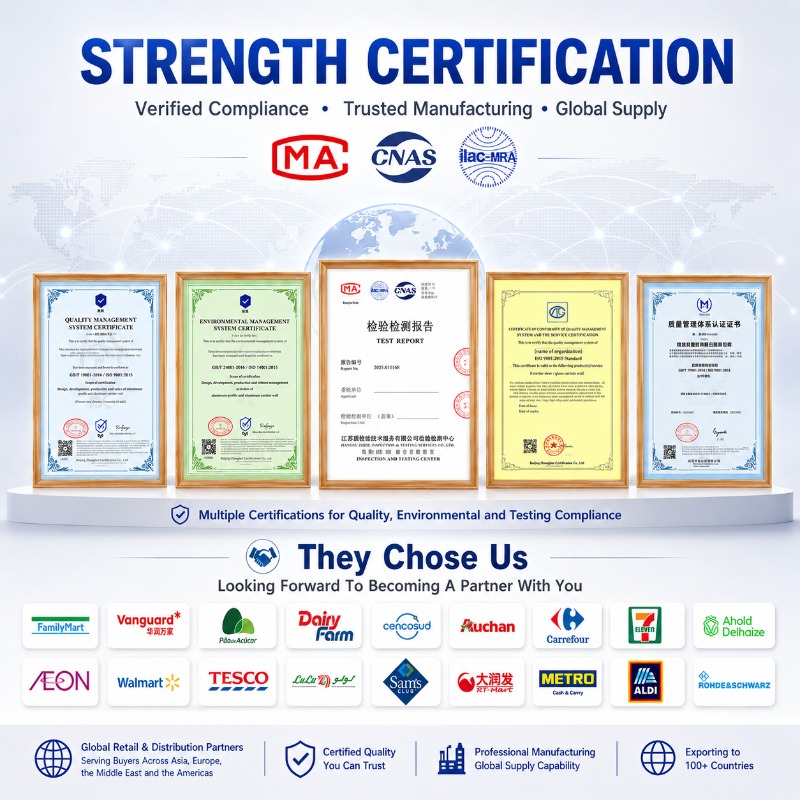
Custom packaging projects often transition from a modest pilot order to large-scale, recurring production as the buyer’s brand gains market traction, and the OEM PET egg tray supplier must be able to scale its output without compromising on quality or delivery timelines. Evaluating an OEM PET egg tray supplier’s production infrastructure involves examining the number of dedicated injection molding lines, the clamping force and automation level of the equipment, and the monthly output capacity in both units and tonnage. A supplier operating twenty or more specialized production lines has the physical capacity to allocate dedicated resources to large accounts and to accommodate seasonal volume spikes without disrupting other orders. Quality assurance systems are equally critical: the OEM PET egg tray supplier should maintain documented inspection protocols at every production stage, from incoming resin testing to first-shot approval, in-process dimensional checks, and final batch audits. ISO 9001 certification for quality management and food safety management certifications provide external validation of these systems. Export readiness encompasses not only the ability to produce compliant documentation packages for the destination market but also expertise in container loading optimization, palletization, and logistics coordination. An OEM PET egg tray supplier that has successfully shipped to multiple international markets brings a depth of operational knowledge that prevents customs delays, reduces landed costs, and ensures that the trays arrive at the buyer’s facility in perfect condition, ready to be filled.
The Step-by-Step OEM PET Egg Tray Project Workflow
From Requirement Confirmation to Sample Approval
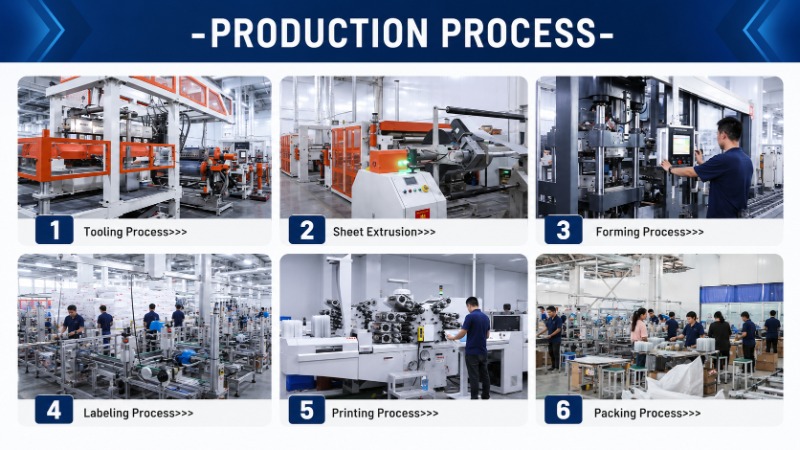
A structured workflow is the backbone of every successful custom packaging project, and a professional OEM PET egg tray supplier will guide the buyer through each phase with clear milestones and deliverables. The process begins with requirement confirmation, during which the buyer provides egg dimensional data, tray capacity targets, material and color preferences, logo artwork, labeling specifications, and volume projections. The OEM PET egg tray supplier analyzes this information, searches its mold library for a matching cavity profile, and presents a technical proposal that includes the recommended tray specification, a mold assessment, and a preliminary timeline. If an existing mold is suitable, the OEM PET egg tray supplier produces sample trays directly from that mold; if a new mold is required, the design and fabrication phase is initiated. Sample trays are shipped to the buyer, who packs them with actual eggs and tests them through the packing line, the cold chain, and the intended transport route. This sample evaluation is the most critical validation point in the entire workflow, because it reveals how the tray performs under real-world conditions. The OEM PET egg tray supplier should actively solicit feedback from the buyer at this stage and be prepared to make adjustments to the cavity fit, closure force, or material gauge based on the trial results.
From Trial Production to Final Shipment
Once the sample has been approved and any adjustments implemented, the OEM PET egg tray supplier moves into trial production. A small batch is run on the actual production line that will be used for the ongoing supply, and the trays are subjected to a full battery of quality checks including dimensional verification, compression testing, and visual inspection. The buyer is encouraged to pack and ship eggs in these trial trays and to gather feedback from end customers, because the performance of the packaging at the retail shelf is the ultimate measure of success. After trial validation, the production parameters are locked in, and the full production order is scheduled. The OEM PET egg tray supplier coordinates the labeling, coding, and outer carton preparation according to the buyer’s specifications, ensuring that the trays arrive at the buyer’s facility retail-ready and fully compliant. A final pre-shipment inspection, often conducted by a third-party quality assurance firm or by the buyer’s designated representative, verifies that the entire batch meets the agreed standards before the container is sealed. Throughout this workflow, the OEM PET egg tray supplier maintains clear communication, providing production updates, inspection reports, and shipping documentation so that the buyer always knows the status of the order.
Initiating a Successful OEM Partnership
Leveraging Extensive Mold Resources and Customization Capabilities
The difference between an ordinary supplier and a genuine OEM PET egg tray supplier partner becomes evident in the range of solutions that can be offered when a buyer’s requirements fall outside standard parameters. A supplier with a mold inventory exceeding six hundred active sets can accommodate unusual egg sizes, non-standard tray capacities, and specialized stacking requirements without the buyer having to compromise on protection or presentation. This depth of mold resource also enables the OEM PET egg tray supplier to support buyers who need multiple tray configurations, for example, a 12-egg retail tray and a 30-egg food service tray, all carrying the same brand colors, logo embossing, and label design. In-house mold design and fabrication capabilities mean that when a truly unique cavity profile or branding feature is required, the OEM PET egg tray supplier can develop it efficiently and retain the mold for the buyer’s exclusive use. The ability to integrate labeling and coding into the production line further streamlines the supply chain: an OEM PET egg tray supplier that offers in-line label application, direct inkjet coding, and sleeve-wrapping services can deliver trays that are completely retail-ready, eliminating the need for the buyer to invest in labeling equipment or to manage a separate labeling operation. This comprehensive customization capability, supported by rapid sampling and responsive communication, enables the buyer to bring new products to market faster and with greater confidence.
Submitting Your Project Details for a Tailored OEM Proposal
The most effective way to begin an OEM engagement is to compile a complete project brief and submit it to a qualified OEM PET egg tray supplier. The brief should include the average length, equatorial diameter, and weight of the eggs to be packed; the desired tray capacity or capacities; the target material grade and any recycled content preferences; the brand color reference and logo artwork files; the labeling requirements including the type of information and the preferred placement; the estimated monthly or quarterly order volume; and the destination market so that the OEM PET egg tray supplier can prepare the appropriate regulatory compliance documentation. Upon receiving this brief, the OEM PET egg tray supplier will respond with a detailed proposal that includes a mold availability assessment, a recommended cavity profile, a production timeline with clear milestones, a container loading calculation, and a transparent cost breakdown. This proposal allows the buyer to make an informed decision and to proceed with confidence, knowing that the OEM PET egg tray supplier has the mold inventory, the production capacity, and the export experience to deliver custom packaging that performs flawlessly and strengthens the brand every time a carton is placed on a retail shelf.
Frequently Asked Questions About Working with an OEM PET Egg Tray Supplier
The typical lead time for a custom OEM egg tray project from initial inquiry to first shipment
The lead time depends primarily on whether an existing mold can be used or a new mold must be fabricated. When the OEM PET egg tray supplier has a suitable cavity profile in its existing mold library, the process from sample approval to full production shipment can often be completed in a matter of weeks. If a new mold is required, the design, fabrication, testing, and sampling cycle extends the timeline, but an OEM PET egg tray supplier with in-house mold-making capabilities can still deliver significantly faster than industry averages. Buyers can accelerate the process by providing complete egg dimensional data, finalized logo artwork, and clear labeling specifications at the initial inquiry stage, because every missing detail introduces a cycle of clarification and revision that adds days or weeks to the total lead time. The OEM PET egg tray supplier should provide a realistic timeline at the proposal stage and then manage that timeline proactively, alerting the buyer immediately if any unforeseen delay arises.
The minimum order quantity requirements typically set by an OEM PET egg tray supplier
Minimum order quantities vary depending on whether the project uses an existing mold or requires new mold fabrication. Projects that utilize an existing cavity profile from the OEM PET egg tray supplier’s mold library generally have a lower minimum order quantity because the tooling cost is already amortized. Projects that require a new custom mold typically involve a higher minimum order quantity to justify the tooling investment, although some suppliers offer flexible arrangements such as spreading the mold cost over an initial series of orders. The OEM PET egg tray supplier should be transparent about its minimum order requirements from the first conversation, enabling the buyer to plan accordingly and to evaluate the total cost of ownership rather than focusing solely on the per-tray price.
The documentation an OEM PET egg tray supplier should provide to prove food-grade compliance
A trustworthy OEM PET egg tray supplier will provide a complete compliance dossier that includes a statement of conformity to the relevant food contact regulations for the destination market, such as EU Regulation 10/2011 or FDA 21 CFR, supported by third-party migration test reports from an ISO 17025 accredited laboratory performed on the finished tray. The dossier should also include material safety data sheets for the resin used, batch-level traceability records linking the finished trays to the specific resin shipment, and any additional certificates required by the importing country, such as those addressing specific substances of concern. This documentation should be provided before the shipment is produced, not after, so that the buyer has time to review it and share it with the importer or customs broker.
How an OEM PET egg tray supplier handles a situation where the sample trays do not meet the buyer’s expectations during the trial phase
A professional OEM PET egg tray supplier treats the sample evaluation as a collaborative refinement process rather than a pass-or-fail gate. When the buyer reports that the sample trays do not meet expectations, whether because the cavity fit is slightly off, the closure force is too strong, or the label surface is not perfectly flat, the OEM PET egg tray supplier should immediately analyze the feedback, identify the root cause, and propose specific mold or process adjustments. Revised samples should be produced and shipped promptly, and this iterative loop should continue until the buyer is fully satisfied with the tray performance. The willingness of the OEM PET egg tray supplier to engage in this refinement process without imposing additional charges or creating delays is a strong indicator of its commitment to long-term partnership.
What Makes a Good OEM PET Egg Tray Supplier? A Complete Buyer’s Guide
Table of Contents
- The Foundation of a Successful Custom Egg Tray Project
- Critical Information to Prepare Before Engaging an OEM PET Egg Tray Supplier
- Core Criteria for Evaluating an OEM PET Egg Tray Supplier
- The Step-by-Step OEM PET Egg Tray Project Workflow
- Initiating a Successful OEM Partnership
-
Frequently Asked Questions About Working with an OEM PET Egg Tray Supplier
- The typical lead time for a custom OEM egg tray project from initial inquiry to first shipment
- The minimum order quantity requirements typically set by an OEM PET egg tray supplier
- The documentation an OEM PET egg tray supplier should provide to prove food-grade compliance
- How an OEM PET egg tray supplier handles a situation where the sample trays do not meet the buyer’s expectations during the trial phase
- What Makes a Good OEM PET Egg Tray Supplier? A Complete Buyer’s Guide