 EN
EN

The Forces Reshaping Retail Egg Packaging Decisions
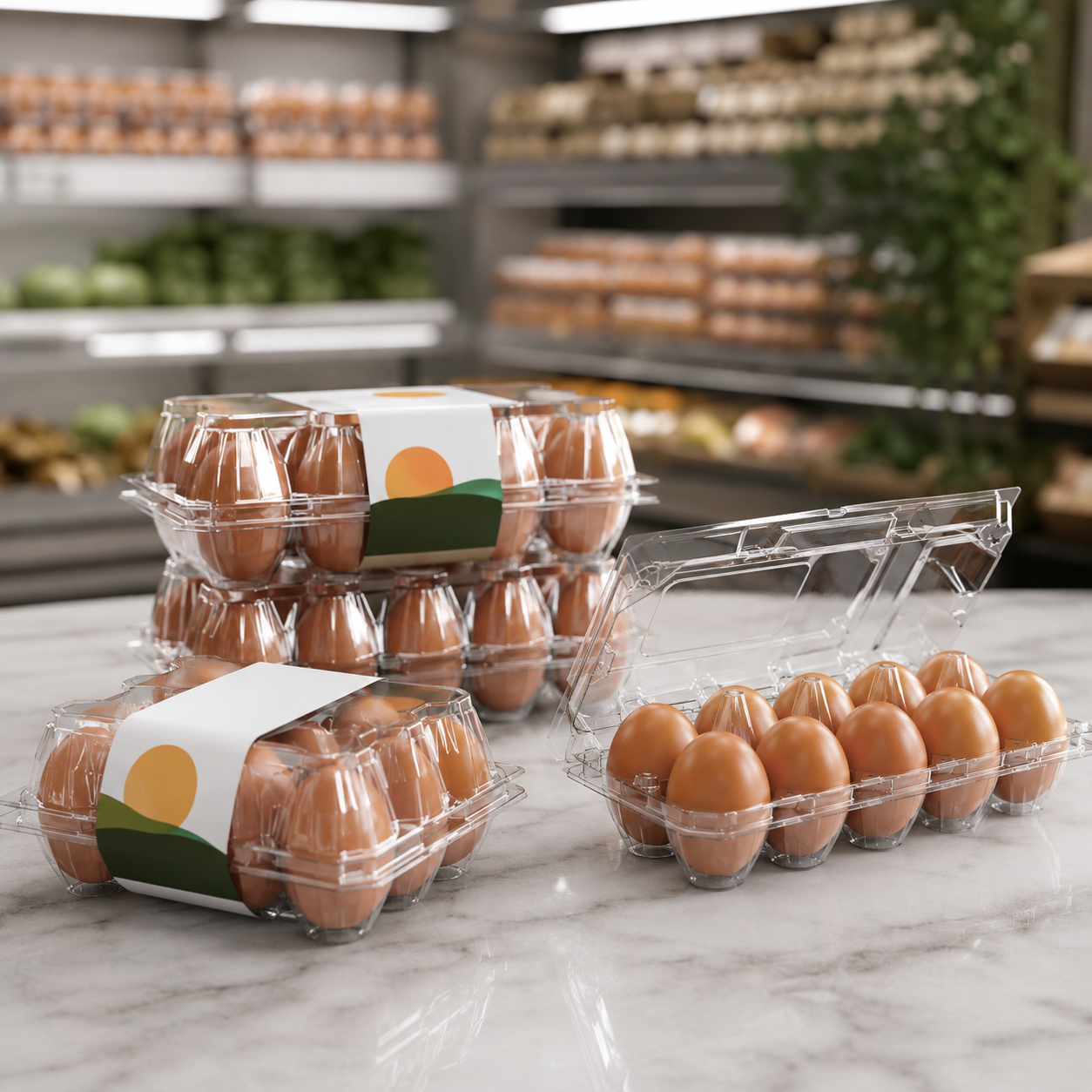
Egg buyers who walk into a supermarket dairy aisle today encounter a packaging landscape that is fundamentally different from the one that existed even a few years ago. The shift has been driven not by a single breakthrough but by the convergence of several powerful retail egg packaging trends that together are redefining what constitutes an effective carton. Retailers and brand owners now evaluate egg packaging through a lens that encompasses visual merchandising, supply chain efficiency, regulatory compliance, and brand storytelling all at once. The carton that succeeds in this environment must allow the shopper to see the product clearly, must carry information that builds trust and satisfies labeling requirements, must stack securely on a pallet and on a refrigerated shelf, and must convey a brand identity that justifies the price point. These retail egg packaging trends reflect a deeper understanding of consumer psychology: the purchase of eggs, long considered a routine commodity transaction, has become a moment of brand engagement where packaging quality directly influences perceived product quality. Have you ever wondered why some egg brands command a premium while others are trapped in perpetual discounting? The answer often lies in how well the packaging aligns with the retail egg packaging trends that shape modern buyer expectations. A carton that is opaque, flimsy, or difficult to stack communicates a lack of investment that customers subconsciously associate with the eggs inside. Conversely, a carton that is transparent, robust, and beautifully labeled signals that the producer cares about every detail from the farm to the checkout. For procurement managers and brand directors, staying informed about retail egg packaging trends is not a matter of curiosity but a competitive necessity that determines whether their product will be picked up or passe d over in the critical three seconds of a shopper’s attention.

Core Retail Packaging Trends and Their Practical Applications
Transparent Packaging That Builds Consumer Trust
The most visible of the retail egg packaging trends reshaping the category is the widespread adoption of clear materials that eliminate the guesswork in egg selection. Shoppers presented with an opaque carton must decide whether to trust the brand’s quality claims or to open the lid and check for themselves, an action that introduces handling risks and disrupts the display. Clear PET egg cartons remove this friction entirely by making the eggs themselves the primary visual element of the package. Every shell color variation, every confirmation of cleanliness, and every reassurance of intactness is available to the shopper without a single touch. This transparency trend directly addresses a deep consumer need for food safety verification, and it has been shown to reduce the time a customer spends hesitating in front of the shelf. The psychological effect is straightforward: a brand that hides nothing must have nothing to hide. When retail egg packaging trends emphasize visibility, the packaging becomes a silent quality guarantee that operates continuously from the moment the carton is stocked until the moment it is purchased. For producers of specialty eggs such as organic, pasture-raised, or omega-3 enriched varieties, the ability to showcase the rich shell colors and uniform sizing that result from superior farming practices is a marketing advantage that no printed claim can match.
Integrated Labeling and Coding That Meet Retail Compliance Demands
Alongside the push for transparency, retail egg packaging trends have placed increasing emphasis on the quality and placement of printed information. A clear carton must still communicate the brand name, the nutritional panel, the certification logos, the sell-by date, the lot code, and the barcode, and all of these elements must remain legible and scannable in the humid environment of a refrigerated case. Modern PET egg trays address this requirement through precisely engineered flat label panels that accept pressure-sensitive adhesives without edge lifting, and through dedicated printable zones that can receive direct inkjet coding for variable data. The integration of labeling and coding into the tray structure eliminates the need for a separate stickered label for date information, reducing packing line complexity and the risk of mismatched codes. When retail egg packaging trends drive toward shelf-ready designs, the goal is that every carton arriving at the store can be placed directly into the display without additional handling, labeling, or repacking. For retailers operating private-label programs, these trends mean that the packaging supplier must be capable of delivering trays that are pre-labeled with the store’s brand artwork and fully coded with batch traceability, ready to accept eggs the moment they arrive at the packing facility. The ability to reconcile aesthetic branding with mandatory information within a single, cohesive package design is a defining characteristic of the retail egg packaging trends that are now standard in mature markets.
Stackable and Shelf-Ready Architectures That Optimize Retail Operations
Behind the visual appeal, retail egg packaging trends are increasingly shaped by the operational realities of high-volume retail. A carton that looks beautiful on the shelf but collapses when stacked six layers high on a warehouse pallet creates costs that erode the brand’s margin. The most effective modern egg trays incorporate interlocking stacking lugs and vertical load-bearing columns that transfer the weight of upper layers through the packaging structure rather than through the eggs. This engineering ensures that a pallet built at the packing facility remains perfectly aligned and stable through trucking, cross-docking, and final placement in the retail back room. Shelf-ready design extends the concept further: the tray should fit the standard depth of a refrigerated multi-deck case, should be easy for stock clerks to lift and place, and should present the label facing forward without manual orientation. When retail egg packaging trends move toward stackable, shelf-ready formats, the result is a reduction in in-store labor, a decrease in product damage during replenishment, and a consistently attractive shelf appearance that benefits the brand and the retailer equally. For the buyer, specifying packaging that aligns with these trends means engaging with a supplier that offers not just a tray but a complete system of tray, outer case, and pallet configuration designed to work together seamlessly from the loading dock to the point of sale.
Custom Branding Through Molded Features and Color Integration
Brand differentiation in a crowded egg aisle requires more than a printed label; it demands that the packaging itself become a recognizable brand asset. One of the most impactful retail egg packaging trends is the use of embossed logos, custom base colors, and distinctive closure mechanisms that are molded directly into the PET tray during production. An embossed logo, for example, catches the light differently at every angle and provides a tactile experience when the consumer handles the carton, creating a sensory connection that a flat-printed logo cannot replicate. Custom color tinting of the tray base, using food-safe masterbatch matched to the brand’s Pantone reference, extends the brand’s visual identity into the packaging material itself, ensuring that even a sideways glance down the aisle identifies the brand unambiguously. These customization capabilities are not merely decorative; they are strategic tools that align with the retail egg packaging trends favoring premiumization and emotional engagement. A brand that invests in custom PET egg packaging communicates permanence, attention to detail, and a commitment to quality that justifies a higher retail price. For private-label programs, the ability to create a consistent look across all egg sizes and types using custom molded branding helps the retailer build house brand loyalty that drives repeat traffic and basket size.
Precision Cavity Geometry That Adapts to Diverse Egg Types
The retail market for eggs has diversified far beyond the standard large white egg, and retail egg packaging trends have evolved to accommodate this variety. Heritage breeds, duck eggs, quail eggs, and jumbo double-yolk eggs each present unique dimensional profiles that standard trays cannot safely hold. A cavity that is too large allows the egg to shift during transport, accumulating vibration damage, while a cavity that is too small concentrates pressure on the shell and creates fracture points. Modern PET egg trays address this through precision cavity geometries that are designed around the exact equatorial diameter and length of the target egg type. For a buyer sourcing packaging for multiple egg categories, the supplier should be able to provide different cavity profiles within the same tray format, so that the brand’s visual identity remains consistent across the product range while each egg receives the specific protection it requires. These retail egg packaging trends toward dimensional customization mean that the days of forcing every egg into a one-size-fits-all pocket are ending, replaced by an engineered approach that treats packaging as a tailored protective system rather than a generic commodity.
Aligning Trends with Buyer Pain Points and Packaging Solutions
Translating Market Observations into Actionable Packaging Specifications
Understanding retail egg packaging trends at a conceptual level is useful, but procurement decisions require a clear linkage between a trend, the specific pain point it addresses, and the packaging feature that resolves it. The table below maps the most significant retail egg packaging trends to the buyer challenges they solve and the corresponding product solutions that a competent PET egg tray manufacturer can deliver. This framework allows buyers to move from observation to specification without guesswork.
Every buyer concern identified in the analysis of current retail egg packaging trends has a direct counterpart in the design features of a well-engineered PET egg tray. The visual inspection problem that drives consumers to open cartons and cause in-store damage is solved by crystal-clear PET material. The label legibility and adhesion issues that plague textured pulp surfaces are solved by smooth, flat label panels molded into the PET tray. The stack collapse and load shift that occur when absorbent trays weaken in humid cold storage are solved by interlocking PET tray geometries with dedicated load-bearing columns. The challenge of differentiating a brand on a crowded shelf is met by embossed logos, custom base colors, and precisely positioned label zones that create a distinctive visual signature. The difficulty of packing non-standard egg sizes without excessive breakage is addressed by cavity profiles designed to the specific dimensional range of the eggs being packed. By systematically mapping retail egg packaging trends to pain points and solutions, a buyer can build a packaging specification that addresses every link in the chain from consumer perception to warehouse logistics.
Implementing Trend-Responsive Packaging in Your Supply Chain
Adopting Clear PET Egg Trays for Maximum Visibility and Protection
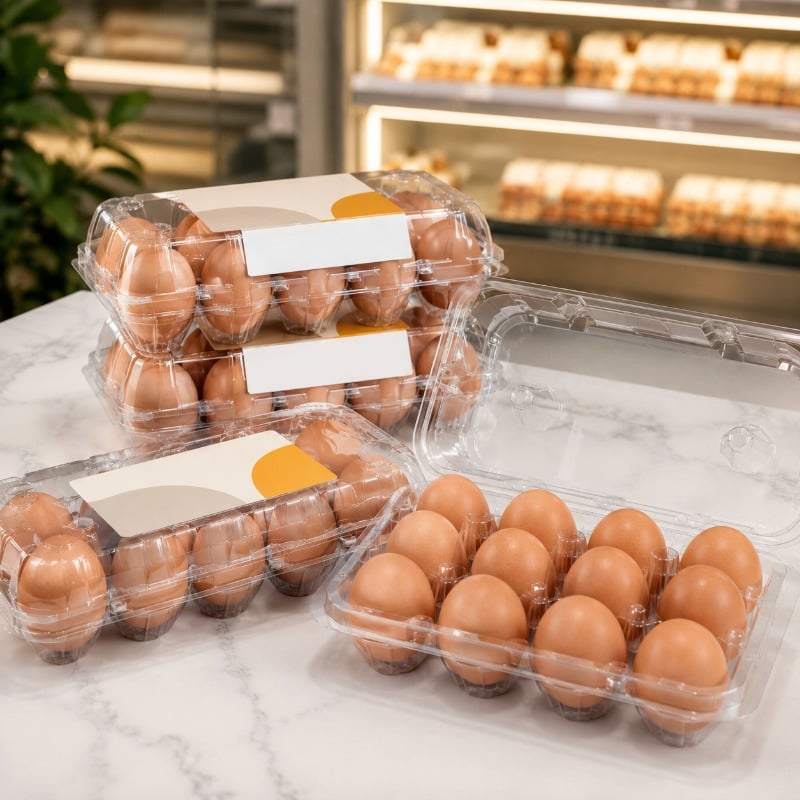
When retail egg packaging trends point so decisively toward transparency, the selection of a clear PET egg tray becomes the logical foundation of a modern retail packaging strategy. These trays combine the visibility that satisfies consumer inspection instincts with the moisture resistance that preserves structural integrity in cold chain environments. A clear PET tray equipped with a secure snap-fit closure prevents accidental opening during stocking while still allowing easy access for the end user. The dimensional stability of PET means that the tray maintains its cavity shape, interlocking geometry, and label surface flatness regardless of humidity or temperature, delivering consistent performance from the packing line to the consumer’s refrigerator. For buyers evaluating clear PET egg trays, the key specifications to confirm include the maximum recommended stack height under refrigerated conditions, the availability of tamper-evident closure options, and the compatibility of the tray’s printable surfaces with the coding equipment used on the packing line. A supplier that can provide this technical data along with sample trays for trial packing and shipping enables the buyer to validate that the chosen tray meets the performance benchmarks established by the retail egg packaging trends analysis.
Leveraging Custom Label Solutions for Brand Building and Compliance
Alongside the tray itself, the label system is where brand identity and regulatory compliance converge. The smooth surfaces of a clear PET egg tray provide an ideal substrate for pressure-sensitive labels that remain firmly adhered and wrinkle-free even after weeks in a refrigerated display. Custom label design should balance the brand’s visual storytelling with the mandatory information required by the destination market, using the designated label panels to create a clear hierarchy of communication. For buyers who wish to simplify their packing operations, some suppliers offer pre-labeled trays that arrive at the packing facility ready to be filled, eliminating the need for on-site label application and reducing labor costs. Advanced custom label solutions also support variable data printing, where batch codes, expiration dates, and QR-based traceability links are applied directly to the tray surface, providing a seamless information package that serves the needs of retailers, regulators, and consumers simultaneously. These label capabilities are a direct response to the retail egg packaging trends that demand both aesthetic excellence and information integrity from every carton placed on the shelf. By integrating custom labeling into the packaging procurement, a buyer can ensure that the tray is not just a container but a comprehensive communication platform.
Frequently Asked Questions About Retail Egg Packaging Trends
The driving factors behind the shift toward clear PET egg packaging in retail
The move toward clear PET egg packaging is driven by the intersection of consumer behavior and operational efficiency. Shoppers consistently express a desire to inspect eggs before purchase, and transparent packaging satisfies this need without the damage and mess associated with open-lid inspection. Retailers benefit from reduced in-store product loss and a tidier shelf presentation. The moisture resistance and structural consistency of PET also align with the cold chain realities of egg distribution, where absorbent materials often weaken and cause damage. These combined factors have made clear PET egg packaging one of the most consistently observed retail egg packaging trends across multiple markets and retail formats.
The way current retail egg packaging trends affect private-label brand strategies
Retail egg packaging trends directly enable private-label brands to compete more effectively with established national brands. The availability of custom embossed logos, matched brand colors, and integrated labeling allows a supermarket chain to create a distinctive, premium-looking egg package that rivals the shelf presence of any national competitor. These customization options, combined with the transparency that consumers value, give private-label eggs a quality perception that supports higher price points and stronger customer loyalty. For retailers, staying current with retail egg packaging trends means being able to offer a private-label egg program that is indistinguishable in quality perception from the leading brands on the same shelf.
The importance of stackability and shelf-ready design within retail egg packaging trends
Stackability and shelf-ready design have become central to retail egg packaging trends because they directly address the labor and damage costs that eat into retail margins. A tray that interlocks securely and maintains its geometry under load allows pallets to be built higher and transported with fewer shifts, reducing the frequency of restacking and the incidence of pressure cracks. Shelf-ready designs that allow stock clerks to place entire stacks onto the refrigerated shelf without reorienting labels or checking for damage reduce in-store labor time and keep the display looking full and orderly throughout the shopping day. These operational efficiencies make stackable, shelf-ready packaging a priority for buyers who must manage both the marketing and the logistics of egg retailing.
The role of cavity customization in the context of retail egg packaging trends
As the egg category diversifies to include more specialty and heritage breed offerings, cavity customization has become an important element of retail egg packaging trends. A generic cavity cannot safely hold eggs that fall outside the standard size distribution, and the resulting movement and pressure lead to breakage that damages the brand’s reputation. Cavity customization based on actual flock egg measurements ensures that every egg is gripped securely without constriction, regardless of whether it is a small quail egg or an extra-large jumbo. This tailored approach to protection allows buyers to extend their product range with confidence, knowing that the packaging will support rather than undermine the premium positioning of specialty eggs.
Retail Egg Packaging Trends for Buyers: Clear PET Trays, Labels and Shelf-Ready Design
Table of Contents
- The Forces Reshaping Retail Egg Packaging Decisions
-
Core Retail Packaging Trends and Their Practical Applications
- Transparent Packaging That Builds Consumer Trust
- Integrated Labeling and Coding That Meet Retail Compliance Demands
- Stackable and Shelf-Ready Architectures That Optimize Retail Operations
- Custom Branding Through Molded Features and Color Integration
- Precision Cavity Geometry That Adapts to Diverse Egg Types
- Aligning Trends with Buyer Pain Points and Packaging Solutions
- Implementing Trend-Responsive Packaging in Your Supply Chain
-
Frequently Asked Questions About Retail Egg Packaging Trends
- The driving factors behind the shift toward clear PET egg packaging in retail
- The way current retail egg packaging trends affect private-label brand strategies
- The importance of stackability and shelf-ready design within retail egg packaging trends
- The role of cavity customization in the context of retail egg packaging trends
- Retail Egg Packaging Trends for Buyers: Clear PET Trays, Labels and Shelf-Ready Design