 EN
EN

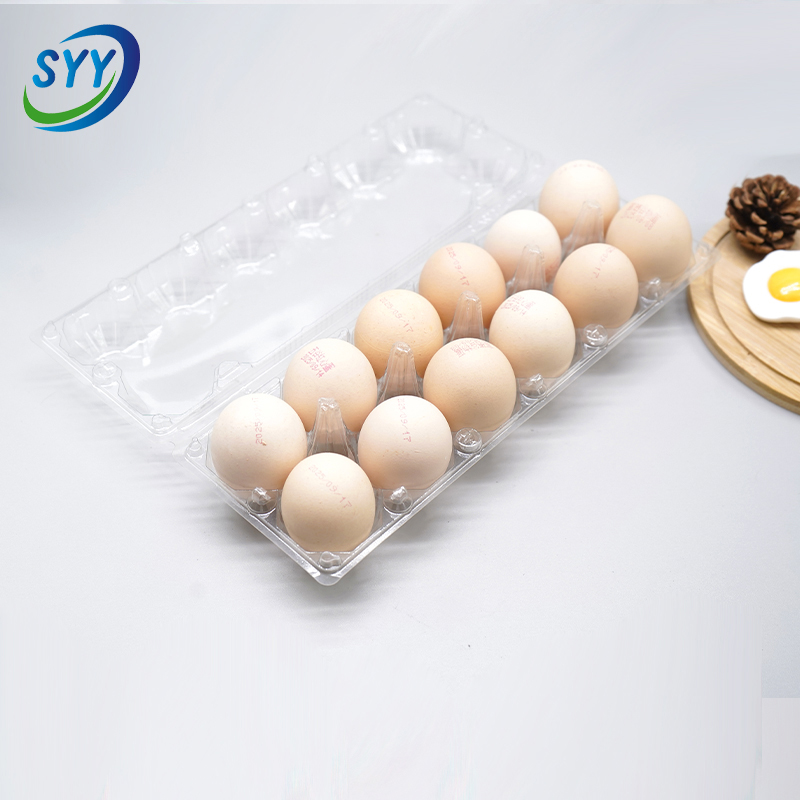
Thickness and Tray Weight Are Not the Same
One of the most common misunderstandings in procurement conversations is treating PET egg carton thickness and egg tray weight as interchangeable specifications. They are related, but they describe different things, and confusing them during an RFQ often leads to mismatched expectations between buyer and manufacturer.
Thickness refers to the physical measurement of the PET sheet before it is thermoformed into a tray — typically expressed in millimeters or microns. Tray weight, by contrast, is the total gram weight of the finished, formed carton, which depends not only on PET egg carton thickness but also on the tray's surface area, depth, and structural design. Two trays can share the same thickness yet differ significantly in final gram weight simply because one has a deeper cup profile or more surface area across its base.
For buyers, this distinction matters because specifying only one variable — say, "0.3mm thickness" — without confirming the resulting tray weight can lead to unexpected rigidity or cost outcomes once production samples arrive.

How PET Thickness Affects Rigidity
PET egg carton thickness directly influences how much a carton flexes under load, but the relationship isn't perfectly linear. Thicker sheets generally resist bending and puncture better, which matters most at stress points like the tray's center span and corner supports.
Typical Thickness Ranges and Their General Behavior
| Thickness Range | General Rigidity | Common Applications |
|---|---|---|
| 0.20mm–0.25mm | Lower rigidity, more flexible | Retail display, short-distance handling |
| 0.28mm–0.35mm | Moderate to high rigidity | Standard retail and farm distribution |
| 0.38mm+ | High rigidity, minimal flex | Export packing, automated line handling |
While thicker material does improve baseline stiffness, thickness alone doesn't guarantee performance. This is why PET tray material thickness should always be discussed alongside the tray's structural design rather than as a standalone number.

Why Structure Can Matter More Than Extra Material
A tray's shape does much of the rigidity work that buyers often assume comes from thickness alone. Reinforcement ribs — small raised or recessed lines molded into the tray's base and walls — distribute pressure across a wider area, reducing localized flex points that would otherwise cause cracking or warping.
The Role of 3D Support Contours
Beyond flat reinforcement ribs, many trays use 3D support contours around each egg cup, creating a shaped cradle that adds vertical strength without increasing sheet thickness. This design allows a tray using less raw material to match or exceed the rigidity of a flatter, thicker tray, since the load path is distributed through the contour rather than absorbed by the flat sheet alone.
This is a key reason two trays with similar egg tray weight can perform very differently under stacking pressure — one may rely on structural geometry, while the other depends purely on added material mass.
Choosing Specifications by Egg Size and Use
Specification needs shift depending on both the egg size being packed and the handling environment the tray will move through.
Retail Distribution
Retail-bound trays typically prioritize a balance of moderate thickness and clean structural lines, since handling is generally gentler but shelf presentation and stacking in-store still require consistent rigidity.
Farm and Local Distribution
Trays used closer to the point of production often tolerate slightly thinner PET, since transport distances are shorter and handling cycles are fewer, reducing cumulative stress on the structure.
Export Packaging
Export shipments typically require thicker material and stronger 3D support contours, since trays undergo longer transit times, multiple handling points, and greater stacking height within shipping containers.
Automated Egg Loading Lines
Trays used in automated filling systems need tight dimensional consistency in both thickness and cup depth, since automated equipment relies on predictable tray geometry to place eggs accurately without misalignment.

Common RFQ Specification Mistakes
Buyers frequently submit RFQs that specify only one dimension of the tray's performance, which can lead to samples that don't match expectations.
Specifying Weight Without Confirming Structure
Requesting a target gram weight alone doesn't account for how that weight is distributed. A supplier could meet the requested weight using thinner material with heavier reinforcement, or thicker material with minimal structure — producing very different rigidity outcomes for the same stated weight.
Omitting Application Context
Failing to mention whether the tray is intended for export, automated loading, or short-distance retail use can result in a supplier defaulting to a general-purpose specification that may not suit the buyer's actual handling conditions.
B2B Specification Checklist
Before submitting an order, buyers should confirm the following details as part of a complete egg carton specification guide:
| Specification Item | Why It Should Be Confirmed |
|---|---|
| PET sheet thickness (mm) | Establishes baseline material rigidity |
| Final tray gram weight | Confirms total material usage post-forming |
| Reinforcement rib pattern | Affects load distribution and flex resistance |
| 3D cup support contour | Adds strength independent of thickness |
| Tray dimensions (L x W x H) | Ensures fit with cartons and shipping cases |
| Intended application (retail, farm, export, automated) | Aligns structural design with handling conditions |
Confirming these items together, rather than isolating one variable, gives both buyer and supplier a shared technical reference for evaluating samples and finalizing production specifications.
FAQ
Is a heavier egg tray always stronger?
Not necessarily. Tray strength depends on how material is distributed through reinforcement ribs and 3D support contours, not just total gram weight. A lighter tray with efficient structural design can outperform a heavier one with minimal reinforcement.
How do buyers specify PET thickness?
Buyers typically specify thickness in millimeters based on the sheet gauge used before thermoforming, and should confirm this alongside the tray's final weight and structural features rather than as a standalone figure.
Why can two trays with similar weight perform differently?
Two trays with matching gram weight can differ in rigidity if one relies on thicker flat material while the other uses structural reinforcement, such as ribs or 3D cup contours, to distribute pressure more effectively.
Can thickness and gram weight be customized?
Yes, both PET sheet thickness and final tray gram weight can typically be adjusted during mold and material planning, allowing buyers to tailor specifications to their specific application, whether retail, farm distribution, export, or automated loading.