 EN
EN

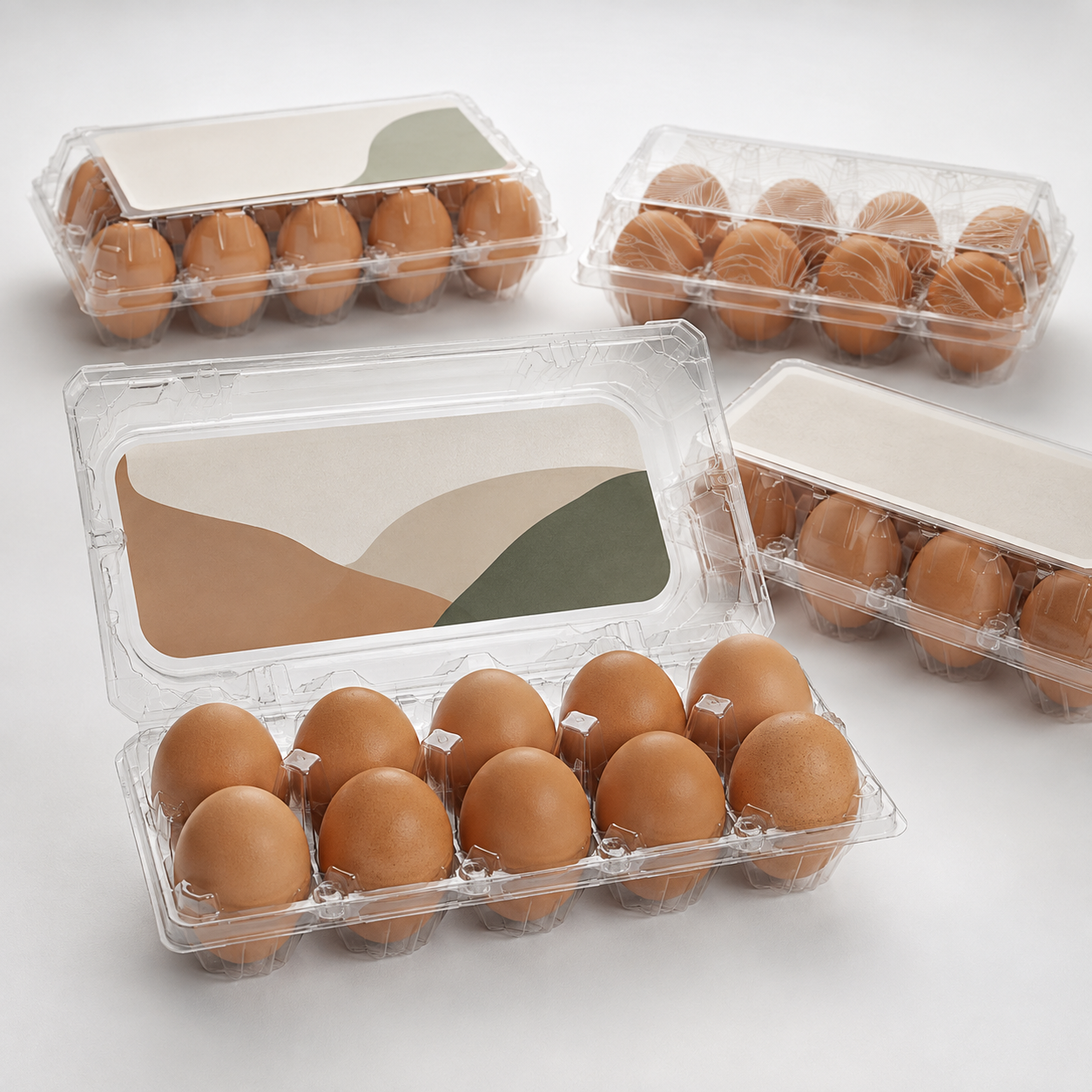
Why Labeling Matters in Retail Egg Packaging
For brands selling eggs at retail, packaging is often the only touchpoint a shopper has with a company before purchase. This makes egg carton labeling a core part of brand execution, not a finishing step added at the end of production. A well-placed label communicates freshness, origin, and quality assurance at a glance, while a poorly placed one can be cropped by shelf shadows, folded at a seam, or simply too small to read.
Procurement teams sourcing PET egg cartons need to think about egg carton labeling early in the buying process, because the flat surface area, carton size, and printing method all interact with each other. A label that works well on a 6-count carton may not scale cleanly to a 30-count case pack. Getting this right from the start avoids costly redesigns after the first production run.
The Retail Stakes of Getting Labeling Right
Retailers increasingly expect suppliers to provide consistent batch information and clean branding across every case pack. Inconsistent egg carton labeling across different carton sizes can create a fragmented shelf presence, especially when a brand sells multiple pack formats side by side.
Label Area Size and Placement
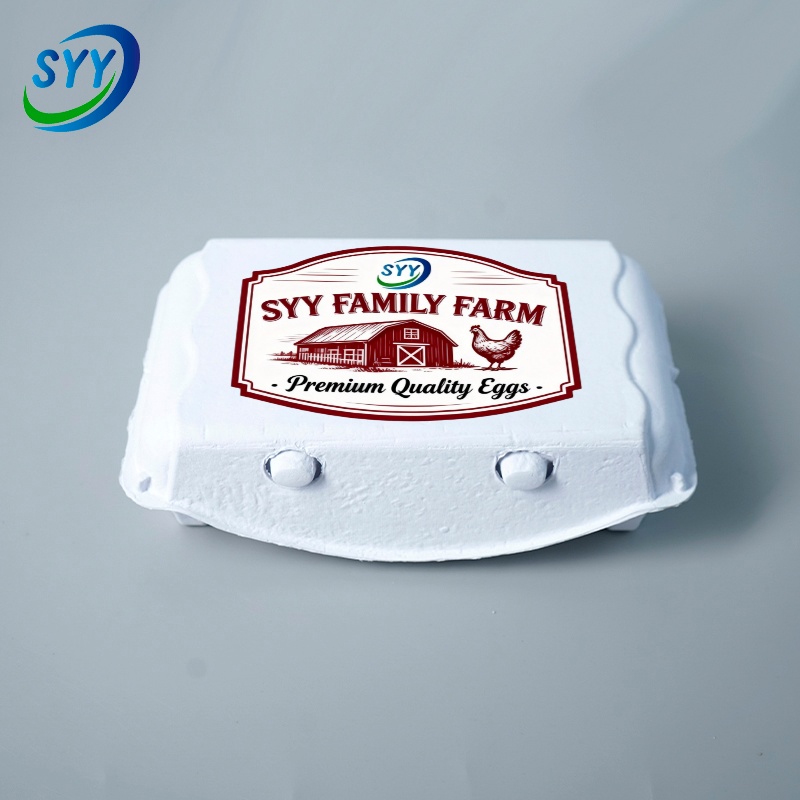
PET egg cartons are molded rather than folded, which allows for a consistently flat central panel — usually on the top face of the carton. This flat zone is what we refer to as the PET egg carton label area, and it remains stable across the entire production batch, unlike pulp trays that can warp slightly during drying.
Comparing Label Areas by Carton Size
The available label area scales with carton capacity. Below is a general comparison based on our standard mold formats:
| Carton Size | Approx. Label Area | Typical Content Fit |
|---|---|---|
| 6-count | 60mm x 40mm | Logo + Packed On date |
| 12-count | 90mm x 55mm | Logo + Batch No. + Packed On |
| 30-count (case pack) | 150mm x 80mm | Full branding + barcode + compliance text |
Larger formats like the 30-count case pack offer enough surface area to separate branding elements clearly, while smaller 6-count cartons require more compact, prioritized layouts for egg carton labeling.
Sticker Labels vs Inkjet Printing
Two primary methods apply branding to a PET egg carton: adhesive sticker labels and direct inkjet printing. The right choice depends on design complexity, how often content changes, and order volume.
Sticker Labels
Sticker labels are applied post-molding and support full-color, high-detail graphics, including gradients and photography. They're well suited to brands that frequently update promotions, seasonal designs, or Batch No. and Packed On information without needing to adjust production equipment.
Inkjet Printing
Inkjet printing applies ink directly onto the flat label area, reducing material costs at scale since no separate label substrate is needed. It handles logos, solid colors, and variable text like Batch No. and Packed On dates well, though highly detailed artwork may lose sharpness compared to a sticker.
Both methods accommodate the same customizable fields, giving brands flexibility in how they approach egg carton labeling based on operational fit rather than being locked into a single system.
How PET Surface Design Affects Label Application
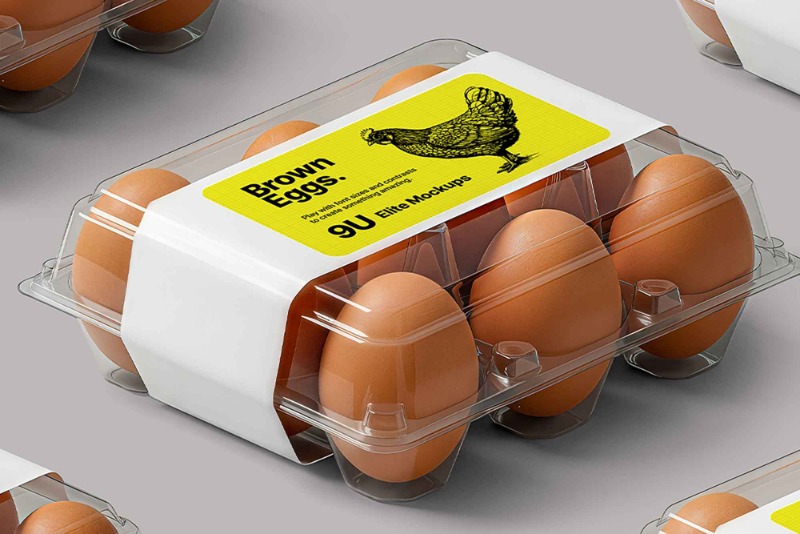
A flat, unribbed center panel is essential for clean label application, whether using stickers or inkjet. Adhesive labels bond best to smooth surfaces free of texture, preventing air pockets or lifted edges. Inkjet printing similarly needs a stable, even surface so ink dries without smudging or pooling near panel edges.
Why Mold Design Matters Early
Cartons with heavily contoured or ventilated tops can restrict where labels or print can be placed. Planning the labeling zone during mold design — rather than after production starts — helps avoid last-minute artwork resizing or placement compromises for egg carton labeling.
Choosing a Branding Method by Order Volume
Order volume often determines the more practical branding method. Smaller or seasonal runs typically favor sticker labels, since they require no line changes and can be swapped between batches easily. Larger, recurring orders — particularly 30-count case packs — often favor inkjet printing, where cost savings scale with volume and Batch No. or Packed On data can be updated digitally without reprinting physical labels.
A Hybrid Approach for Daily Data
Many brands combine both methods: inkjet printing handles fixed elements like the logo and compliance text, while a small sticker covers variable daily data such as Packed On dates. This balances consistent egg carton printing with day-to-day operational flexibility.

Buyer Checklist Before Customizing Labels
Before finalizing custom egg packaging labels, buyers should confirm the following with their supplier:
| Checklist Item | Why It Matters |
|---|---|
| Confirmed label area per carton size | Prevents artwork resizing errors |
| Printing method (sticker vs inkjet) | Impacts cost, turnaround, and detail level |
| Variable data fields (Batch No., Packed On) | Supports traceability compliance |
| Mold flatness in labeling zone | Affects adhesion and print quality |
| Minimum order quantity per method | Aligns cost with production scale |
Reviewing these points before the first production run helps keep egg carton labeling consistent across future reorders and multiple pack formats.
FAQ
Which printing method is better for bulk orders?
Inkjet printing is generally more cost-effective for bulk orders, particularly 30-count case packs, since it removes per-unit label material costs and supports faster high-volume production.
Can PET egg cartons use paper labels?
Yes, adhesive paper or film-based labels can be applied to PET egg cartons, provided the label area is flat and free of ribbing to allow proper adhesion.
What information should appear on an egg carton label?
Most retail cartons include a logo, Batch No., and Packed On date at minimum, with some brands adding barcodes or regional compliance certifications.
Can label areas be customized?
Yes, label area size and placement can be adjusted during mold design, allowing brands to plan ahead for either sticker application or direct inkjet printing based on branding needs.