 EN
EN

Choosing the Right Egg Tray Material for Your Supply Chain
Egg packers and procurement managers face a subtle but persistent challenge: two trays that look perfectly adequate on a loading dock can deliver dramatically different results after eight hours in a refrigerated truck or three days under supermarket fluorescent lights. The conversation around PET egg trays vs molded pulp trays is not simply about one material being universally better than the other; it is about matching the packaging to the distribution channel, the logistics reality, and the retail expectations that define a market segment. A tray that serves a local farmers’ market well may completely fail in a cross-border export scenario where condensation and rough handling are unavoidable. Before a buyer commits to a bulk order, the first step should be mapping out the journey the eggs will take from the grader to the consumer’s hand, because that journey dictates whether the investment in PET egg trays vs molded pulp trays swings toward clarity and consistency or toward initial unit cost and familiarity. Have you ever witnessed a shipment rejected because the retailer could not quickly inspect the product inside? That moment of rejection is almost always a packaging decision that was made without considering the final point of sale. Understanding PET egg trays vs molded pulp trays in their full operational context prevents those expensive discoveries and aligns procurement with the brand experience the customer ultimately receives.
Side-by-Side Comparison of Key Performance Indicators
Direct Comparison Across Essential Packaging Attributes
When a buyer sits down to evaluate PET egg trays vs molded pulp trays, the decision matrix usually includes seven dimensions: unit cost, visual clarity, moisture resistance, stackability and compression strength, retail presentation, ease of label application, and transport shock protection. A methodical look at how these two material categories perform against each criterion provides a reference that can guide supplier negotiations and pilot trials. Unit cost per tray is often the first figure examined, and molded pulp trays generally present a lower initial purchase price. However, that advantage must be weighed against the hidden expenses that accumulate when humidity weakens the tray or when a single impact permanently compresses the cushioning structure. PET egg trays typically carry a moderately higher upfront cost, yet farms that switch discover the premium is offset through reduced breakage, fewer returns, and the possibility of reuse in closed-loop systems. When the total lifecycle cost of PET egg trays vs molded pulp trays is calculated over a full year, the gap in favor of pulp frequently narrows or disappears entirely in high-humidity, long-distance channels.
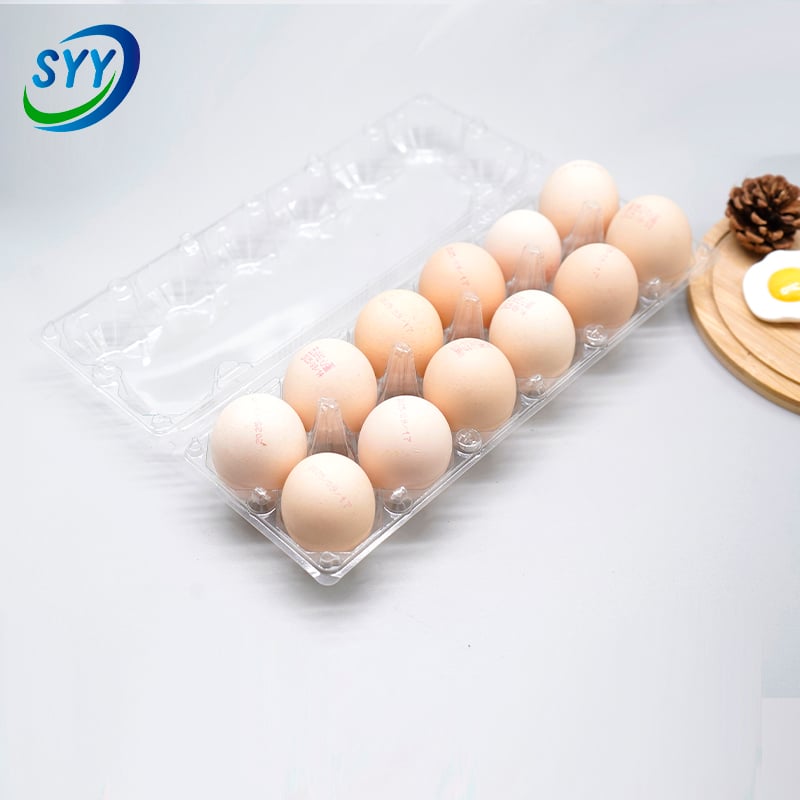
Visual clarity introduces another decisive factor. PET egg trays offer complete transparency, allowing graders, retailers, and consumers to inspect every egg without opening the pack or lifting the product out of its protective cavity. Molded pulp trays are entirely opaque, forcing quality checks to become invasive handling events that themselves risk cracking shells. How many eggs are accidentally broken during the inspection process simply because someone needed to see whether a shell was intact? The visual access inherent in PET egg trays vs molded pulp trays reduces that handling damage and gives retail buyers confidence that they are purchasing a verified, crack-free product. Moisture resistance deepens the performance gap further. PET egg trays are impervious to water and retain their full mechanical strength even when condensation drips inside a refrigerated truck or when trays pass through a wash cycle. Molded pulp absorbs ambient moisture, swells, and can lose forty percent or more of its compressive capacity within a single overnight cold storage period. This degradation is invisible to warehouse staff until pallets collapse or eggs arrive with pressure cracks, making moisture resistance a critical safety factor in any PET egg trays vs molded pulp trays comparison that involves a cold chain.
Stacking strength and creep resistance determine how tall a pallet can be built and how long it can sit in a distribution center without damaging the bottom layers. PET egg trays are manufactured with engineered vertical load columns and interlocking rims that transfer weight directly through the tray walls, keeping the eggs themselves load-free. Molded pulp, by contrast, tends to creep under sustained weight, allowing cavities to deform and press onto the eggshells below. This means that in a stack of pulp trays, the lowest eggs often bear the weight of dozens of layers above them, a recipe for hairline cracks that go undetected until the consumer opens the package. The retail shelf appeal of PET egg trays vs molded pulp trays presents a stark visual contrast as well. PET delivers a modern, high-clarity presentation that lets the natural shell color and uniformity become part of the product’s allure, whereas molded pulp offers a traditional, matte finish that can read as rustic or economical depending on the brand context. For farms that invest in premium positioning, organic certification, or specialty breed storytelling, the transparent canvas of PET elevates perceived value in a way that pulp cannot replicate.
Label and print compatibility also separates the two materials. The smooth, flat top surface of a PET egg tray accepts pressure-sensitive labels, adhesive sleeves, and tamper-evident seals with excellent adhesion and no risk of ink migration into the package interior. Molded pulp surfaces are textured and fibrous, which can cause labels to lift at the edges, and any direct printing may blur if the tray absorbs moisture during the cold chain. Finally, transport shock and vibration protection reveals a fundamental mechanical difference. PET egg trays can be injection-molded with dedicated crumple zones, flexible cavity skirts, and multi-point contact geometries that absorb impact energy elastically and immediately recover their shape. Molded pulp provides decent initial cushioning through its fibrous mass, but that mass compresses permanently after a single significant drop. A second impact on an already-compressed pulp tray transmits far more force directly to the eggshell. For supply chains where cases are handled multiple times, the repeatable, resilient protection engineered into PET egg trays vs molded pulp trays translates directly into fewer breakage claims and higher customer satisfaction.
Balancing Performance Metrics Against Channel Requirements
While the attributes above provide a clear technical profile, the practical meaning of each shifts depending on whether the eggs are sold in a self-service chilled cabinet, delivered to a restaurant kitchen, or exported in a sea container. A detailed side-by-side analysis reveals that each attribute’s importance is amplified or muted by the specific demands of the distribution channel. A retail shopper scanning a shelf stocked with PET egg trays vs molded pulp trays will make a snap judgment based on what they can see; if an opaque pulp tray conceals a single cracked egg, the entire brand risks being mentally flagged as unreliable. That same shopper may also be swayed by the tactile and visual cues of a material that appears natural and biodegradable, illustrating that the PET egg trays vs molded pulp trays decision is never purely technical but always intersects with consumer psychology and market positioning. By contrast, a commercial kitchen that opens cases and immediately transfers eggs to stainless steel racks may prioritize cushioning and cost over shelf aesthetics, shifting the calculation in a direction that may favor pulp, provided the delivery route is short and the storage environment dry. The discipline of mapping measurable performance differences onto real customer touchpoints is what separates strategic packaging choices from commodity purchasing, and it is the only way to make the PET egg trays vs molded pulp trays decision with genuine confidence.
Understanding the Advantages of PET Egg Trays in Modern Retail
Crystal-Clear Product Presentation and Brand Impact
When a shopper picks up a carton of eggs, the first interaction is visual, and PET egg trays transform that moment into a quality assurance event. The transparent material invites the eye to inspect each egg’s shell color, surface cleanliness, and yolk shadow without opening the lid. Does this matter for sales? Retail studies consistently show that products visible through packaging generate higher purchase confidence, and for a category where shell integrity is paramount, that confidence is worth a measurable premium. Beyond inspection, PET egg trays vs molded pulp trays differ dramatically in the way they communicate brand identity. A crisp, injection-molded PET tray can feature embossed farm logos, reinforced rim branding, and a polished surface that aligns with premium organic, pasture-raised, or omega-enriched positioning. The same tray accepts tamper-evident seals and full-body sleeve labels that turn a commodity dozen into a branded lifestyle product. For farms investing in storytelling, certification logos, and high-impact photography, the printability and clarity of PET egg trays provide a canvas that pulp simply cannot replicate. This presentation advantage becomes especially relevant when eggs are merchandised in well-lit refrigerated cases where the product must compete for attention against dozens of other brands, each trying to signal freshness and quality at a glance.
Superior Moisture Resistance and Structural Consistency
Eggs are cooled, washed, and stored in conditions that generate significant humidity, and those conditions quickly expose the vulnerability of absorbent materials. A molded pulp tray placed in a walk-in cooler for twelve hours can absorb enough atmospheric moisture to lose thirty to forty percent of its original compression strength, meaning that pallet stacks that were safe at the dock become dangerous overnight. This weakening process is invisible to warehouse staff until a case collapses or eggs begin arriving with pressure cracks. When procurement teams examine PET egg trays vs molded pulp trays with cold-chain integrity in mind, the zero-moisture-absorption property of PET becomes a critical factor. The tray exits the wash, enters the chiller, rides in a refrigerated truck, and sits in a grocery case without undergoing any change in its load-bearing capacity. That consistency eliminates the guesswork from pallet engineering and allows logistics planners to rely on a uniform safety margin. Additionally, because PET egg trays vs molded pulp trays respond so differently to water, operations that wash and reuse packaging find that PET withstands repeated sanitization cycles without warping, delaminating, or losing cavity definition. This washability extends the service life of the packaging asset and supports the closed-loop reuse models that many large-scale producers are adopting to reduce waste and control costs.
Engineered Cavity Geometry That Protects Eggs from Impact
The protective performance of PET egg trays vs molded pulp trays cannot be evaluated solely by squeezing a tray in the hand; it must be understood in terms of how the structure manages energy during a drop or vibration event. PET trays are produced with precision injection molding, which permits the incorporation of complex energy-absorbing geometries under each cavity: tapered crumple columns, flexible support skirts, and contour-matched pockets that cradle the egg at multiple contact points. These features deflect impact forces around the shell and distribute residual pressure so evenly that localized stress cracking becomes rare. In contrast, molded pulp trays rely on the fibrous mass of the material itself to absorb shock, but once those fibers have been compressed by an initial impact, they do not recover. A second drop on the same tray can transmit significantly more force to the eggs. For supply chains where cases are transferred between multiple vehicles and cross-docking facilities, the repeatable shock protection of PET egg trays offers a demonstrable reduction in breakage claims, a reduction that is easy to quantify during a controlled shipping trial. The ability to customize cavity depth and profile to a flock’s actual egg dimensions further differentiates PET egg trays vs molded pulp trays, because a perfectly contoured pocket eliminates the micro-gaps where vibration-induced abrasion can scrub away the protective cuticle and weaken the shell over time.
Where Molded Pulp Trays Continue to Hold Value
Perceived Environmental Benefits and Consumer Acceptance
In certain markets, the matte, earthy appearance of molded pulp communicates sustainability before a single word appears on the label. Consumers who prioritize compostability and renewable fiber sources may actively seek out pulp-packaged eggs, and this perception can be a legitimate marketing advantage in segments that value backyard-compostable packaging. The narrative around PET egg trays vs molded pulp trays often includes an environmental dimension: molded pulp is made from recycled paper or virgin fiber, biodegrades readily in home compost systems, and carries a straightforward end-of-life story. That said, it is important to recognize that PET egg trays are also fully recyclable in established bottle and thermoform recovery streams and can be manufactured with significant post-consumer recycled content, a point that reframes the PET egg trays vs molded pulp trays environmental comparison into a more nuanced discussion about circular systems versus biodegradation. For buyers serving customers who equate sustainability with fiber-based packaging, molded pulp may help close a sale that would otherwise be lost to a competitor who also uses pulp. The key is knowing whether your target demographic makes purchasing decisions based on perceived material origin or on measurable recyclability and material efficiency, because misunderstanding that preference can lead to a packaging choice that satisfies no one.
Cushioning Properties and Cost-Effectiveness in Price-Sensitive Segments
The soft, fibrous structure of molded pulp provides a degree of vibration damping that can be beneficial in short-distance, single-drop distribution loops where extreme humidity is not a factor. A producer delivering directly to a neighboring farmers’ cooperative or a roadside stand may find that the lower upfront cost of pulp trays keeps the overall egg price competitive while still offering adequate protection for the limited handling involved. When comparing PET egg trays vs molded pulp trays strictly on initial purchase order pricing, pulp almost always appears less expensive, a fact that can dominate procurement decisions in high-volume, low-margin commodity egg markets. However, this cost advantage must be weighed against the hidden expenses that emerge when a rainy delivery day soaks the cases, or when a stock clerk rejects a pallet because the bottom trays have compressed and cracked a dozen eggs. For channels where the receiver does not hold the packer financially responsible for transit damage, the apparent savings of molded pulp may be real; where chargebacks and reputation risk are high, the calculation changes significantly. This is why a blunt cost comparison of PET egg trays vs molded pulp trays without factoring in the specific logistics and liability structure of a farm’s sales channels often leads to a decision that looks smart on paper but proves expensive in practice.
Traditional Market Familiarity and Equipment Compatibility
Long-established grading and packing lines were often designed around the dimensions, weight, and denesting behavior of molded pulp trays, and switching to a new material can require adjustments to vacuum pick-and-place settings, stack height sensors, and label applicator timing. For a facility that has run pulp for decades, the operational inertia is strong, and the perceived risk of disrupting a smooth packing season can delay the exploration of PET egg trays vs molded pulp trays. Furthermore, in certain wholesale and institutional channels, buyers have simply become accustomed to receiving eggs in pulp trays, and any deviation from that norm generates questions or, in some cases, unfounded concerns about the suitability of plastic packaging. Familiarity should not be the sole criterion for a packaging decision, but it is a reality that must be acknowledged and managed through buyer education, sample shipments, and clear communication about the performance benefits that prompted the switch. A thoughtful transition plan that includes trial runs, customer feedback loops, and incremental volume scaling can overcome this familiarity barrier and allow the operational advantages of PET egg trays vs molded pulp trays to be demonstrated in the very environments where pulp has historically dominated.
Making the Right Purchase Decision for Your Channel and Logistics
Retail, Export, and Brand-Focused Strategies
When eggs are destined for a supermarket shelf, an export container, or any channel where the product will be handled by consumers who judge quality with their eyes, the balance in PET egg trays vs molded pulp trays tilts decisively toward PET. The transparency alone reduces complaint rates because customers can confirm shell condition before purchase, and retailers appreciate that staff can perform stock rotation checks without opening sealed packs. Export shipments, which often encounter multiple climate zones, pallet re-stacking, and extended transit times, demand the moisture immunity and stack integrity that PET delivers consistently. For branded eggs that carry a farm name, a certification logo, and a premium price point, PET egg trays also elevate the perceived value in a way that supports the price positioning. A buyer who is weighing PET egg trays vs molded pulp trays for a retail or export program should calculate the total cost of ownership, factoring in breakage savings, label adhesion reliability, and the marketing lift that comes from a clean, contemporary presentation, rather than fixating on the per-tray purchase price. The packaging is not simply a cost center in these channels; it is a brand asset that directly influences repurchase rates and retailer relationships.
Traditional Agricultural Markets and Price-Driven Wholesale Channels
There remain segments where the decision between PET egg trays vs molded pulp trays can reasonably come down in favor of pulp, provided the limitations are managed. A short-haul distribution model serving wet markets, street vendors, or budget-oriented wholesale clubs where eggs are transferred to bulk displays immediately upon receipt may never see the moisture or stacking extremes that expose pulp’s weaknesses. In these cases, the lower per-unit cost of pulp can support a competitive retail price, and the rustic appearance may even reinforce a narrative of local, unprocessed food. The crucial discipline is to verify, through a real-world shipping test, that the pulp trays hold up across the actual delivery route during the most challenging season of the year. If the test reveals breakage rates exceeding an acceptable threshold, the buyer must be prepared to reconsider PET egg trays vs molded pulp trays as a solution that protects margins through reduced loss rather than lower input cost. This willingness to let data override habit is what distinguishes a continuously improving operation from one that tolerates chronic, predictable damage as a cost of doing business.
Running a Controlled Trial Before Committing to Large Volumes
No amount of spec sheet analysis replaces the evidence gathered from packing a full pallet with each material and sending both through the toughest delivery lane in the network. When a buyer plans to compare PET egg trays vs molded pulp trays in a live environment, the trial should replicate the maximum stack height, worst-case humidity conditions, and roughest handling that the eggs will realistically encounter. Documenting the number and type of cracks, the condition of the trays after unloading, and the feedback from the receiving dock provides a data-backed foundation for the procurement decision. Share the trial data with a packaging specialist who can then recommend the specific PET egg tray configuration, cavity depth, and outer case design that addresses any weaknesses the experiment uncovered. A properly executed trial transforms the PET egg trays vs molded pulp trays debate from a matter of opinion into a matter of measured performance, giving the buyer the confidence to commit to a specification that will perform predictably season after season.
Matching PET Egg Tray Models to Your Specific Needs
Recommended Tray Configurations for Premium Retail and Export
The shift from evaluating PET egg trays vs molded pulp trays to implementing a PET solution involves selecting the correct tray capacity, pocket profile, and stacking geometry. For premium retail lines, a 12-egg PET tray with high-definition clarity, an anti-scuff rim, and a flat labeling surface allows the farm’s brand to take center stage. For club stores and families purchasing larger quantities, 18-egg and 20-egg configurations provide the right balance of weight and footprint while still showcasing the eggs beautifully. Export-oriented operations often lean toward 24-egg and 30-egg trays that maximize container cube utilization, and these heavier formats require PET trays engineered with reinforced corner posts and interlocking lugs that eliminate layer shifting during ocean transit. A packaging partner that offers a range of PET egg trays and the ability to fine-tune cavity geometry based on actual egg measurement data can help the farm settle on a specification that reduces breakage to the statistical noise level. This level of customization ensures that the performance benefits identified during the PET egg trays vs molded pulp trays evaluation are fully realized in day-to-day operations.
Starting Your Custom Packaging Project with Accurate Egg Data
Once the PET egg trays vs molded pulp trays analysis points toward a PET investment, the next step is a collaborative design process that begins with dimensional data from the flock. Gather a representative sample of eggs from the peak and off-peak laying periods, measure their length and equatorial diameter, and provide that dataset along with details of the grading line speed, pallet pattern, and refrigeration setup. With this information, it becomes possible to create a PET tray with cavities that grip each egg securely without pinching, that stack without loading the shells, and that present the eggs with the aesthetic quality that commands a higher ring at the till. Request a short production run of samples and run them through the packing line, the cold chain, and the customer’s receiving process before scaling up. This measured approach converts the theoretical benefits of PET egg trays vs molded pulp trays into repeatable, documented performance improvement.
Frequently Asked Questions About PET Egg Trays vs Molded Pulp Trays
What is the most significant hidden cost difference when comparing PET egg trays vs molded pulp trays over a full year of use
The most overlooked cost in the PET egg trays vs molded pulp trays comparison is the cumulative loss from moisture-weakened pulp trays that appear intact at the packing shed but progressively collapse during refrigerated transport and warehousing. When a pulp tray absorbs condensation and loses compressive strength, it forces the eggshells in the lower layers to bear weight they were never meant to carry, generating hairline pressure cracks that may not be discovered until the consumer opens the pack. These concealed damages result in refunds, lost repeat purchases, and increased grading labor that far exceed the modest per-tray savings that pulp initially offered. Because PET egg trays remain dimensionally stable regardless of humidity, they eliminate this entire category of loss, turning a higher unit cost into a net saving when the full financial picture is examined.
Can molded pulp trays perform reliably in export shipments that involve sea freight and multiple climate zones
Molded pulp trays can survive export conditions if they are treated with moisture-resistant coatings, packed with desiccants, and limited to short transit durations, but the risk escalates quickly in ocean containers where temperature swings produce persistent condensation. Even coated pulp trays often absorb enough ambient humidity to soften and deform under the sustained vibration of a vessel’s engine, and once deformation begins, the eggs lose the snug cavity fit that prevents impact damage. When buyers assess PET egg trays vs molded pulp trays for intercontinental logistics, the consistency and moisture immunity of PET almost always leads to lower claim rates, making it the safer choice for programs where rejected shipments would create significant financial and relationship costs.
How should a buyer structure a fair trial to determine whether PET egg trays or molded pulp trays better suit their operation
A rigorous PET egg trays vs molded pulp trays trial should include two identical pallet loads, one packed with each tray type, dispatched simultaneously through the most demanding delivery route the farm serves. The pallets should be configured to the maximum stack height used in regular operations and should remain in the cold chain for the full duration of a realistic transit cycle, including any cross-docking or intermediate storage stops. Upon arrival, every egg should be candled and inspected, with the location and type of each crack recorded, and the trays themselves should be measured for deformation and moisture content. Comparing the percentage of breakage, the nature of the damage, and the condition of the packaging provides an objective basis for the PET egg trays vs molded pulp trays decision, and the data can be shared with packaging engineers to refine the chosen tray design before a full production order is placed.
What factors should guide the selection of a specific PET egg tray model once the decision to switch from molded pulp has been made
When a farm moves from a PET egg trays vs molded pulp trays evaluation into PET implementation, the primary selection factors are the size distribution of the flock’s eggs, the stacking height required for warehouse racking, the label application method used on the packing line, and the visual branding goals for the retail environment. A tray that fits medium eggs perfectly will not safely hold extra-large or jumbo eggs, so matching cavity geometry to actual egg measurements is the first priority. The tray must also support the weight of the full stack without transferring any load to the eggs, which dictates wall thickness and pillar design. Finally, the tray surface should be compatible with the farm’s label adhesive and provide a clean, flat area for branding elements. A packaging supplier that offers multiple tray capacities and custom cavity profiling can guide the selection process, ensuring that the chosen PET egg trays address every practical requirement identified during the PET egg trays vs molded pulp trays comparison phase.
Compare tray options with our packaging team before bulk purchasing.
Table of Contents
- Choosing the Right Egg Tray Material for Your Supply Chain
- Side-by-Side Comparison of Key Performance Indicators
- Understanding the Advantages of PET Egg Trays in Modern Retail
- Where Molded Pulp Trays Continue to Hold Value
- Making the Right Purchase Decision for Your Channel and Logistics
- Matching PET Egg Tray Models to Your Specific Needs
-
Frequently Asked Questions About PET Egg Trays vs Molded Pulp Trays
- What is the most significant hidden cost difference when comparing PET egg trays vs molded pulp trays over a full year of use
- Can molded pulp trays perform reliably in export shipments that involve sea freight and multiple climate zones
- How should a buyer structure a fair trial to determine whether PET egg trays or molded pulp trays better suit their operation
- What factors should guide the selection of a specific PET egg tray model once the decision to switch from molded pulp has been made
- Compare tray options with our packaging team before bulk purchasing.