 EN
EN

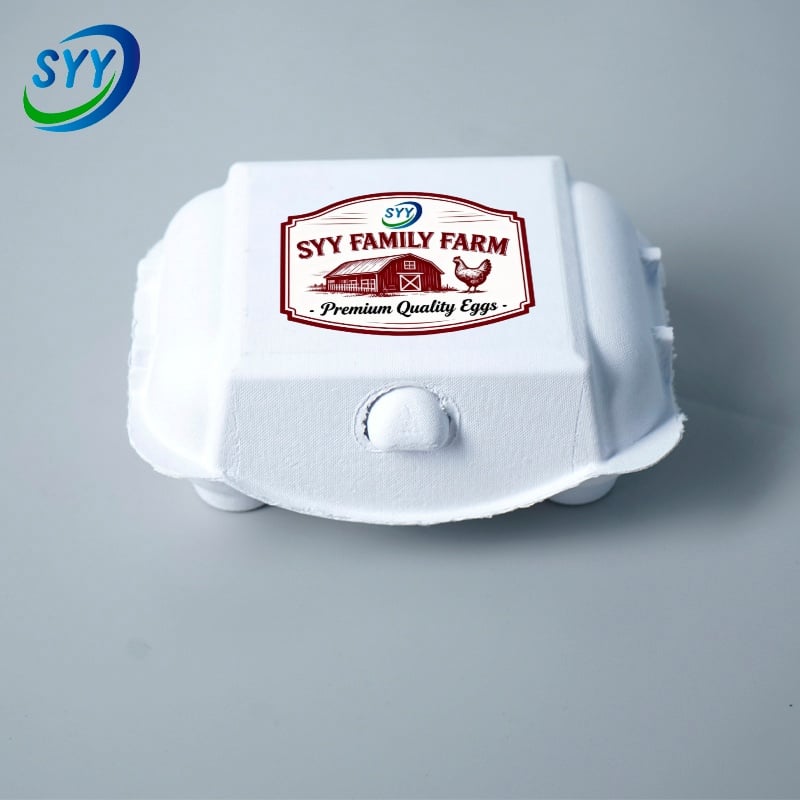
Egg producers and retailers face a critical challenge during logistics: minimizing breakage while keeping packaging costs reasonable. PET egg trays have emerged as a superior solution compared to traditional pulp alternatives, offering measurable advantages in protecting eggs throughout the supply chain. Understanding why PET egg trays outperform pulp in breakage reduction requires examining material properties, structural design, and real-world shipping conditions that impact product safety and profitability.

The choice between PET egg trays and pulp packaging directly affects your bottom line. Broken eggs represent lost revenue, customer complaints, and wasted resources. PET egg trays deliver consistent protection through superior material characteristics, making them the preferred choice for farms, cooperatives, and retail distributors seeking reliable egg shipping solutions.
Material Strength and Impact Resistance
Durability Advantages of PET Plastic
PET egg trays possess inherent material properties that exceed pulp performance in critical protective functions. Unlike pulp, which compresses and weakens when exposed to moisture, PET egg trays maintain structural integrity throughout varied shipping environments. The plastic material resists crushing forces more effectively, absorbing impact energy that would otherwise transfer directly to eggs nestled in compartments.
Pulp egg trays rely on fiber compression for cushioning, but this mechanism degrades as humidity increases during transport. PET egg trays, conversely, maintain consistent rigidity regardless of moisture exposure, ensuring reliable protection from warehouse to consumer. This stability makes PET egg trays the superior choice for routes spanning multiple climates, extended storage periods, or humid conditions.
Structural Integrity Under Pressure
PET egg trays feature molded compartments that cradle each egg with precision engineering designed specifically for breakage prevention. The walls of quality PET egg trays are thicker and more resilient than pulp alternatives, distributing stacking loads across a larger surface area. When pallets of eggs are stacked in distribution centers or transport vehicles, PET egg trays resist deformation that would puncture or crack shells.
Pulp trays, by contrast, flatten under pressure, causing compartment walls to collapse inward and squeeze eggs with dangerous force. This structural failure becomes pronounced in commercial logistics where stacking heights exceed six feet. PET egg trays prevent this collapse, preserving the protective separation between eggs and external pressure throughout the entire shipping journey.
Moisture Resistance and Environmental Protection
Protection Against Humidity and Temperature Fluctuations
Moisture represents one of the primary enemies of pulp egg trays during shipping. When pulp absorbs water from humid environments, its structural properties degrade rapidly, reducing its ability to protect eggs from impacts. PET egg trays offer inherent moisture resistance, maintaining protective capacity regardless of environmental conditions encountered during transport.
Distribution routes frequently pass through warehouses with minimal climate control, cold storage facilities, and humid coastal regions. PET egg trays perform reliably in these challenging environments, while pulp alternatives lose effectiveness as moisture content increases. This environmental resistance makes PET egg trays ideal for international shipping, long-distance routes, and storage in non-temperature-controlled facilities.
Preventing Structural Degradation
The chemical composition of PET egg trays creates a barrier against moisture penetration that pulp cannot match. While pulp materials inherently absorb water, PET egg trays remain dimensionally stable, preventing the warping and compression that leads to egg breakage. Over extended shipping periods, this resistance to moisture-induced degradation translates directly into lower breakage rates and higher product quality reaching consumers.
Quality PET egg trays maintain their original dimensions even when exposed to condensation, rain, or high-humidity storage areas. This dimensional stability ensures that eggs remain properly cradled throughout transit, whereas pulp trays may develop gaps or uneven surfaces that allow eggs to shift dangerously during movement. Consistent performance across all shipping conditions represents a core advantage of PET egg trays over pulp alternatives.
Cost-Benefit Analysis and Practical Advantages
Breakage Reduction Impact on Revenue
The financial case for PET egg trays becomes clear when calculating breakage costs. A typical breakage rate with pulp trays ranges from three to eight percent, depending on shipping distance and handling conditions. PET egg trays consistently reduce breakage to less than two percent, representing substantial savings across high-volume operations.
For producers shipping ten thousand dozen eggs monthly, reducing breakage from five percent to one percent saves approximately forty-eight dozen eggs per shipment. Over a year, this translates to thousands of preserved eggs, generating revenue that exceeds the marginal cost difference between PET egg trays and pulp alternatives. PET egg trays therefore function as an investment in product protection that pays dividends through reduced waste and improved customer satisfaction.
Reusability and Long-term Value
Beyond single-use breakage prevention, PET egg trays offer advantages in reusability and extended lifespan. Many producers implement returnable systems where PET egg trays circulate through distribution networks multiple times before retirement. This reusability extends the cost-effectiveness of PET egg trays, as the initial investment gets amortized across numerous shipment cycles.
Pulp trays, designed for single use, represent a recurring expense that compounds over time. PET egg trays' durability and resistance to degradation make them suitable for twenty or more cycles with proper cleaning and maintenance protocols. This economic advantage, combined with superior breakage prevention, creates a compelling value proposition for PET egg trays compared to disposable pulp options. Additionally, PET egg trays' material can be recycled, offering environmental benefits that appeal to sustainability-conscious retailers and consumers.
FAQ
Why do PET egg trays provide better protection during high-impact shipping events?
PET egg trays absorb and distribute impact forces more effectively than pulp due to their superior material resilience and structural rigidity. The plastic construction maintains its protective shape even under sudden acceleration, deceleration, or rough handling that frequently occurs during commercial shipping. Pulp trays, being fiber-based, compress upon impact and lose their cushioning capacity, allowing eggs to crack. The compartment walls in quality PET egg trays are specifically engineered to isolate each egg, preventing shell-to-shell contact that would cause breakage during transport turbulence.
Can PET egg trays maintain protection in refrigerated distribution environments?
Yes, PET egg trays maintain full protective capacity in cold storage and refrigerated transport conditions where pulp becomes brittle and prone to cracking. The material properties of PET egg trays actually improve in cooler temperatures, maintaining flexibility and impact absorption that prevent breakage. Pulp alternatives become increasingly fragile at lower temperatures, losing structural integrity exactly when reliable protection is most critical for maintaining cold chain integrity and product quality throughout distribution networks.
How does the cost difference between PET egg trays and pulp translate into long-term savings?
Although PET egg trays may have a higher initial purchase price per unit compared to pulp, the total cost advantage becomes apparent through reduced breakage claims, decreased waste, and extended reusability. A single year of reduced breakage using PET egg trays typically recovers the marginal cost difference, with additional years yielding pure savings. When factoring in returnable systems where PET egg trays cycle through twenty or more uses, the cost per shipment becomes significantly lower than continuous pulp purchases, directly improving profit margins for producers and distributors.