 EN
EN

Finding the right egg tray supplier is one of the most consequential procurement decisions a poultry farm, food distributor, or retail chain can make. The quality of your egg packaging directly impacts product integrity during transit, shelf presentation, and ultimately, customer satisfaction. With dozens of manufacturers and distributors competing for your business, the selection process requires a structured, criteria-driven approach rather than a simple price comparison. Understanding what separates a reliable egg tray supplier from an unreliable one can save your operation from costly damage claims, compliance headaches, and supply disruptions.

Whether you are sourcing packaging for a small farm operation or managing procurement for a large-scale supermarket supply chain, the principles for evaluating an egg tray supplier remain consistent. This guide breaks down the key selection factors you need to examine—from material quality and production capacity to customization capabilities and food-safety compliance. By the end, you will have a clear framework to confidently assess any egg tray supplier and make a decision that supports your business goals long-term.
Understanding What Makes a Reliable Egg Tray Supplier
Material Quality as the Foundation
The material used in egg packaging is the single most important indicator of an egg tray supplier's reliability. High-grade materials—whether molded pulp, polystyrene foam, or PET plastic—must provide sufficient cushioning, stacking strength, and moisture resistance. A reputable egg tray supplier will be transparent about the raw materials they source and should be able to provide technical data sheets upon request. Poor-quality materials lead to cracked eggs, contamination risks, and costly product losses.
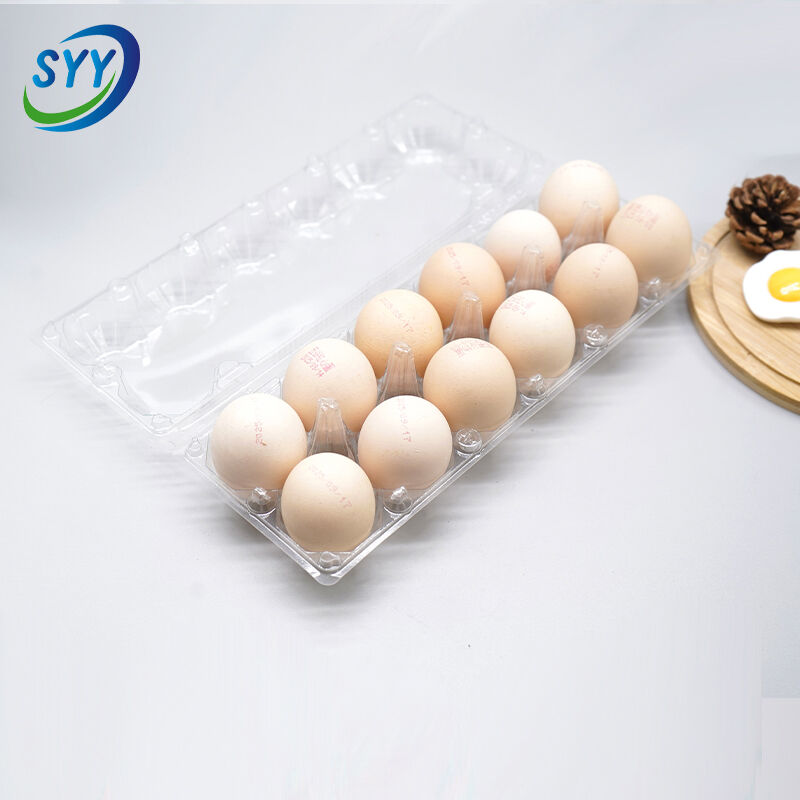
In recent years, clear PET plastic egg trays have gained significant traction in both farm and retail settings due to their durability, visibility, and hygienic properties. Unlike traditional pulp trays, PET plastic variants allow consumers and distributors to visually inspect eggs without opening the packaging. When evaluating a egg tray supplier, ask specifically about the grade and thickness of the material, as these specifications directly translate to load-bearing performance and shelf life. A trustworthy supplier will have no hesitation in sharing this information.
Material consistency between batches is another factor that separates professional suppliers from casual ones. Inconsistent raw materials result in dimensional tolerances that vary from shipment to shipment, which causes problems on automated packing lines and in stacking configurations. Always request batch-to-batch quality assurance documentation before committing to a long-term contract with any egg tray supplier.
Production Capacity and Lead Time Reliability
A capable egg tray supplier must have the production infrastructure to meet your demand volumes without compromising quality or delivery timelines. Before placing large orders, it is worth requesting a production capacity audit or at minimum a detailed overview of the supplier's manufacturing output. This is particularly important for seasonal peaks—such as holiday periods when egg consumption surges—when supply chain pressure is at its highest.
Lead time reliability is closely tied to production capacity. An egg tray supplier who consistently delivers on time demonstrates operational discipline and supply chain maturity. Ask for references from existing clients, particularly those operating at similar volumes, to verify the supplier's track record. Delays in egg tray availability can cascade into production shutdowns on the packing line, which is a risk no farm or distributor can afford to absorb repeatedly.
Inventory management practices also matter. Some suppliers maintain buffer stock to protect customers against production disruptions, while others operate purely on make-to-order models. Understanding which model your egg tray supplier uses helps you plan your own inventory strategy and set appropriate safety stock levels at your facility.
Key Criteria for Evaluating Egg Packaging Manufacturers
Food Safety Certifications and Compliance Standards
Egg packaging comes into direct contact with a food product, which means any credible egg tray supplier must be able to demonstrate compliance with relevant food safety and material safety standards. Look for suppliers who hold certifications such as ISO 9001 for quality management and, where applicable, food contact material certifications that validate their trays are free of harmful chemicals or migrations. These certifications are not merely bureaucratic checkboxes—they signal that the supplier maintains documented processes and undergoes third-party audits.
Regulatory requirements for egg packaging vary by market. If you are distributing eggs across international markets, your egg tray supplier must understand and comply with the food safety regulations of each destination market. Non-compliant packaging can result in shipment rejection, financial penalties, and brand damage. A proactive supplier will flag potential compliance issues upfront rather than leaving them for you to discover after delivery.
It is also worth asking about the supplier's testing protocols—specifically, how they test for structural integrity, load tolerance, and material migration. A sophisticated egg tray supplier will conduct both in-line quality checks during production and final batch testing before dispatch. This dual-layer quality assurance approach significantly reduces the likelihood of receiving substandard packaging.
Customization Capabilities and Packaging Design Support
For farms and food brands looking to build a distinct retail presence, the ability to customize packaging is a significant differentiator. A capable egg tray supplier should offer options for custom branding, color variation, and tray size configurations—such as 6-hole, 10-hole, or 12-hole formats—to match your specific packaging line and retail display requirements. The egg tray supplier you select should ideally serve both farm-level and supermarket-level needs with a versatile product range.
Packaging design support is an often-overlooked service that adds real value in the supplier relationship. Some manufacturers offer basic design assistance, helping clients optimize tray geometry for their specific egg size grades. Others provide structural testing of custom molds before full-scale production begins. This collaborative approach reduces the risk of costly redesigns and helps ensure that the final product performs exactly as expected in real-world handling and transit conditions.
When evaluating customization capabilities, also consider how the supplier manages tooling ownership and minimum order quantities for custom configurations. Some suppliers retain full tooling ownership and charge recurring mold fees, while others transfer tooling rights to the client after an initial investment. Understanding these commercial terms upfront ensures that your relationship with the egg tray supplier remains cost-effective as your volumes grow and your packaging needs evolve.
Assessing Long-Term Partnership Potential
Communication Responsiveness and Technical Support
The quality of communication you experience during the pre-sales phase is typically a reliable indicator of how the supplier will handle issues post-sale. A professional egg tray supplier should respond promptly to inquiries, provide clear and accurate product information, and be willing to discuss technical specifications in depth. Vague or evasive responses during the evaluation stage are red flags that should not be ignored.
Technical support becomes especially critical when issues arise in the field—such as tray deformation at high temperatures, cracking under load, or dimensional inconsistencies affecting automated packaging equipment. A reliable egg tray supplier will have a dedicated technical team that can investigate problems systematically and offer actionable corrective measures within a defined timeframe. This kind of responsive support protects your operational continuity and signals that the supplier treats the relationship as a genuine partnership.
Consider also whether the supplier has dedicated account management structures. Having a consistent point of contact who understands your product specifications, volumes, and delivery preferences eliminates friction in day-to-day interactions. Over time, this depth of account knowledge translates into a smoother ordering process and faster resolution of any supply issues that emerge.
Pricing Transparency and Commercial Terms
Pricing is inevitably a significant factor in supplier selection, but it should never be the only criterion. An unusually low price from an egg tray supplier may indicate compromises in material quality, production standards, or service levels that will cost more to address downstream. The goal is to identify a supplier who delivers consistent value at a competitive price point, not simply the cheapest option on the market.
Look for transparency in how the supplier structures their pricing. Are there volume-based discounts? How are price adjustments handled when raw material costs fluctuate? What are the payment terms, and do they align with your cash flow cycle? A well-structured commercial agreement with a trustworthy egg tray supplier will address these questions clearly and fairly. Ambiguous pricing structures often lead to unexpected cost increases that erode the initial savings you believed you had secured.
Also evaluate the supplier's policies around returns, damage claims, and quality disputes. Every supplier-client relationship will eventually encounter a quality issue; what matters is how it gets resolved. An egg tray supplier with clearly documented dispute resolution procedures demonstrates accountability and confidence in their own product quality. This level of commercial integrity is a strong signal that the supplier is worth building a long-term relationship with.
Sustainability and Environmental Responsibility
Eco-Friendly Material Options and Recyclability
Sustainability has become a baseline expectation for packaging procurement in many markets, and your choice of egg tray supplier should reflect this business priority. Suppliers who offer packaging made from recycled or recyclable materials, or who are actively working to reduce their production carbon footprint, are better aligned with where consumer expectations and regulatory requirements are heading. This matters not just ethically, but commercially—retailers and foodservice operators increasingly require suppliers to meet environmental standards as a condition of doing business.
PET plastic egg trays, for example, are highly recyclable and can be processed through standard municipal recycling streams in many countries. This makes them a more environmentally responsible option compared to multi-material or laminated packaging formats that are difficult to separate and recycle. When assessing an egg tray supplier, inquire about the recyclability of their products and whether they have taken steps to reduce material weight without compromising structural performance.
Some leading suppliers have also implemented take-back schemes or work with recycling partners to ensure that used trays are collected and processed responsibly. While this level of circular economy engagement is not yet universal, it represents the direction the industry is moving. Choosing an egg tray supplier who is proactively engaged in sustainability will serve your business well as environmental scrutiny of supply chains continues to intensify.
Production Efficiency and Waste Reduction Practices
Beyond the end product, a supplier's internal production efficiency reflects broader organizational quality. An egg tray supplier who maintains lean production practices, minimizes material waste during manufacturing, and actively monitors energy consumption is likely to be a more stable, cost-competitive partner over the long term. These operational disciplines translate directly into pricing stability and consistent product quality.
Ask potential suppliers about their scrap rates, energy sources, and any continuous improvement programs they have in place. These are not trivial questions—they reveal whether the supplier approaches their business with the same level of rigor they apply to their product. An egg tray supplier committed to operational excellence at the production level is far more likely to maintain quality standards and service commitments under commercial pressure.
FAQ
What is the most important factor when choosing an egg tray supplier?
Material quality and food safety compliance are the most critical factors. Your egg tray supplier must use materials that are food-contact safe, structurally consistent, and appropriate for your specific handling and distribution environment. These factors directly impact product integrity and regulatory compliance.
How do I verify that an egg tray supplier is reliable before placing a large order?
Request samples for physical testing, ask for client references at similar order volumes, review available certifications, and evaluate their responsiveness during the pre-sales process. A trustworthy egg tray supplier will readily provide this information and support your evaluation process transparently.
Are PET plastic egg trays a good option for both farms and supermarkets?
Yes. Clear PET plastic egg trays offer excellent durability, product visibility, and hygiene properties that make them suitable for both farm-level packing and retail display. They are also recyclable, which supports sustainability goals. Look for an egg tray supplier that offers multiple configuration sizes, such as 12-hole formats, to accommodate different packaging line requirements.
How should I handle pricing negotiations with an egg tray supplier?
Focus on total value rather than unit price alone. Negotiate for volume-based pricing tiers, clear policies on raw material cost adjustments, and defined service-level commitments. An egg tray supplier offering unusually low prices without transparent terms may pose quality or reliability risks that will ultimately cost more than the initial savings suggest.