 EN
EN

Why Count Format Matters
When buyers specify egg packaging, the conversation often defaults to material type, cavity dimensions, or carton thickness. But one of the most operationally significant decisions — and one that directly affects revenue, shelf performance, and packing line efficiency — is the count format itself.
Egg carton count sizes are not interchangeable. Each format reflects a specific combination of channel logic, purchase behavior, and display constraint. A 30-count tray optimized for wholesale distribution will underperform in a farm shop setting, not because of its material quality, but because the format is misaligned with how the end customer shops and how the retailer replenishes stock. Conversely, a 6-count carton placed in a bulk wholesale account creates unnecessary handling overhead and inflates per-unit packaging cost.
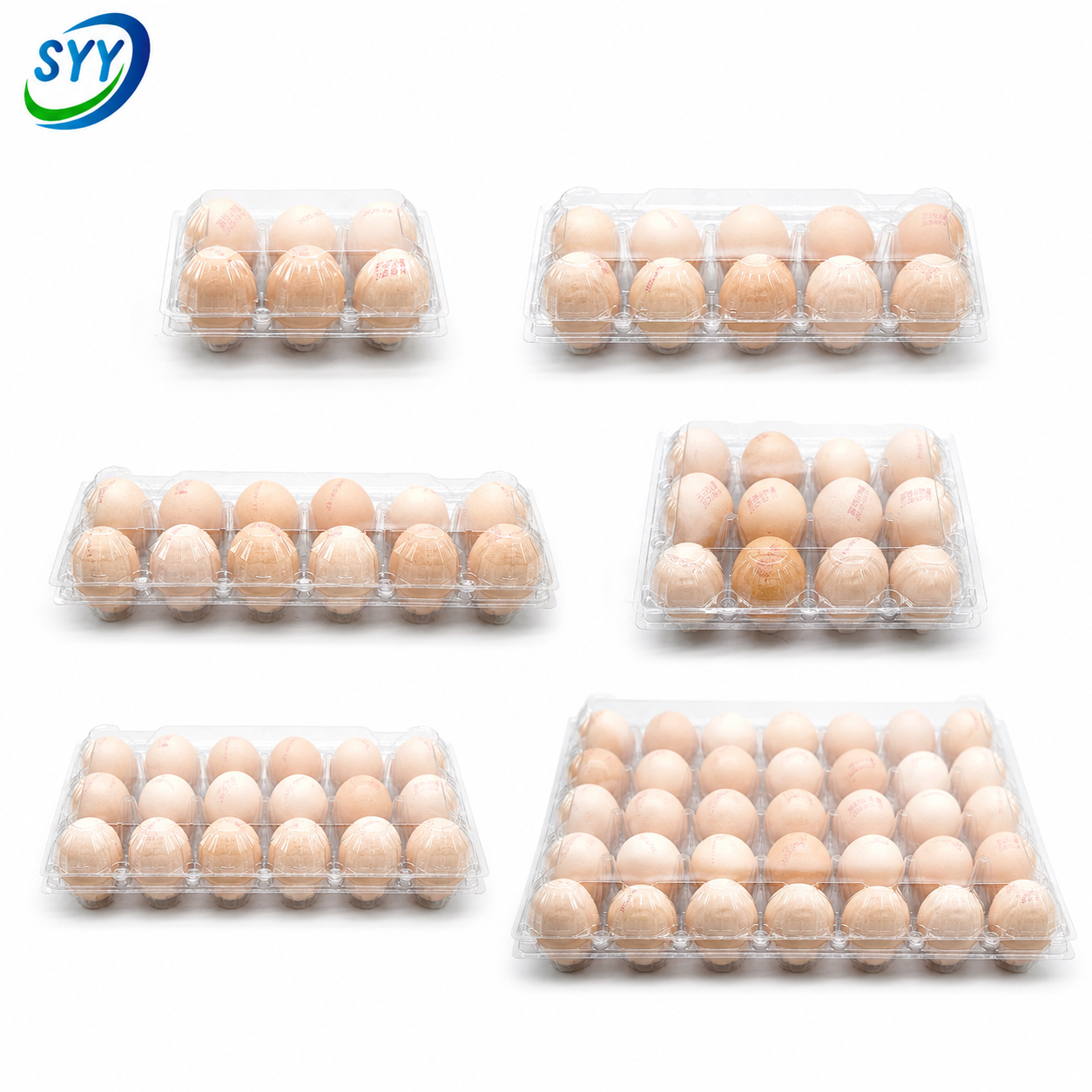
Understanding how egg carton count sizes map onto sales channels, average order value targets, replenishment cycles, and shelf footprint is the foundation of a well-structured packaging specification. This guide covers all major formats — 6, 10, 12, 15, 18, 20, 24, and 30 count — and provides a practical selection framework for procurement and packaging buyers.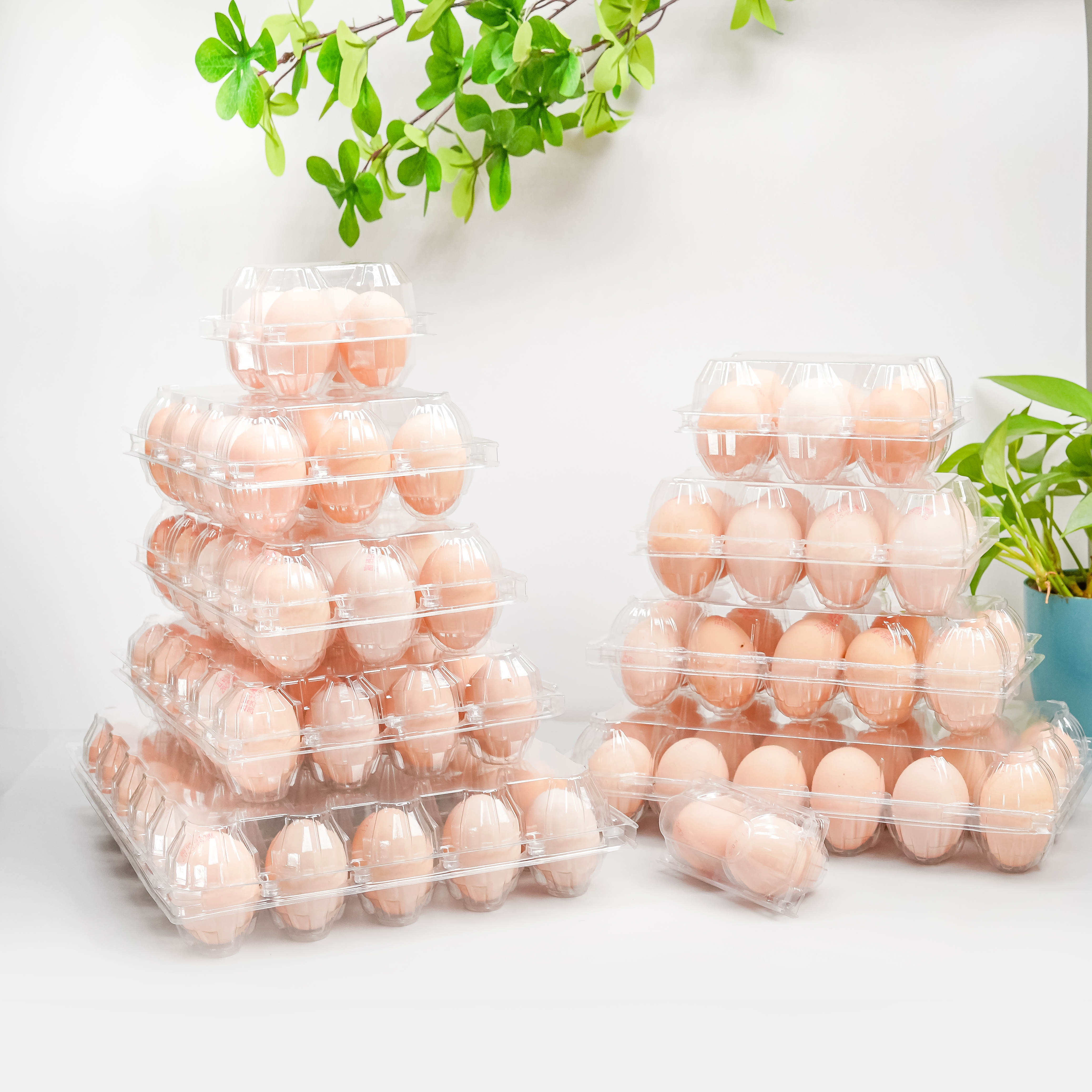
Small Packs: 6 and 10 Count
6-Count Cartons
The 6-count carton occupies a distinct position in egg retail. It is not simply a half-size version of a 12-count — it serves a fundamentally different buyer profile. Consumers purchasing 6-count cartons typically fall into one of three categories: single-person households with low weekly consumption, premium or specialty egg buyers testing a new product at lower financial commitment, or gift and farmers' market customers drawn to the smaller, more portable format.
From a retail economics standpoint, the 6-count format supports a higher per-egg retail price. Because the total ticket price remains low, consumers are less price-sensitive on a per-unit basis, which makes this format well-suited for organic, free-range, or heritage breed egg brands where average selling price per egg is elevated.
For farm-direct operations and market stalls, 6-count cartons also serve a display function: they can be stacked, fanned, or arranged on a small table with minimal footprint, offering visual variety without requiring significant shelf space investment.
10-Count Cartons
The 10-count format is less common in mainstream grocery but holds a durable presence in specific markets where decimal pricing conventions or local consumer habits favor even-number pricing at a mid-size quantity. In some European and Southeast Asian retail environments, 10-count is treated as a practical compromise between the 6 and 12, appealing to two-person households or buyers who prefer a round-number pricing structure.
Packing efficiency for 10-count cartons is comparable to 12-count on most semi-automated lines, though tray indexing and lane configurations may require minor tooling adjustments depending on equipment design.
 Mainstream Retail: 12 and 15 Count
12-Count Cartons
The 12-count carton is the dominant format in most modern grocery retail environments. Its prevalence is self-reinforcing: consumers are conditioned to buy by the dozen, retailers allocate shelf facings based on it, and packing operations are typically tooled around it. From a packaging buyer's perspective, the 12-count format offers the broadest supplier base, the most standardized tooling, and the most predictable replenishment cycle.
For category managers, the 12-count format also offers flexibility. It accommodates standard, premium, and value-tier SKUs within the same shelf slot width, allowing retailers to tier pricing across brands without restructuring the planogram. Average shelf life turnover for 12-count in high-traffic grocery is typically three to five days, making it a reliable format for both fresh egg rotation and promotional placement.
15-Count Cartons
The 15-count carton is less commonly stocked in mainstream grocery but serves a defined niche: the value-oriented family buyer who purchases eggs frequently and in larger quantities than the 12-count allows, but does not want to commit to an 18 or 24-count purchase. In warehouse-style retail environments and club-format stores, the 15-count occupies a transitional position between everyday retail and bulk purchasing.
Shelf footprint for a 15-count is moderately larger than a 12-count, which can affect planogram fit on standard gondola shelving. Buyers specifying 15-count formats should confirm that their retail partner's shelf depth accommodates the longer tray dimension without overhang or stacking compromise.
Larger Packs: 18, 20 and 24 Count
 18-Count Cartons
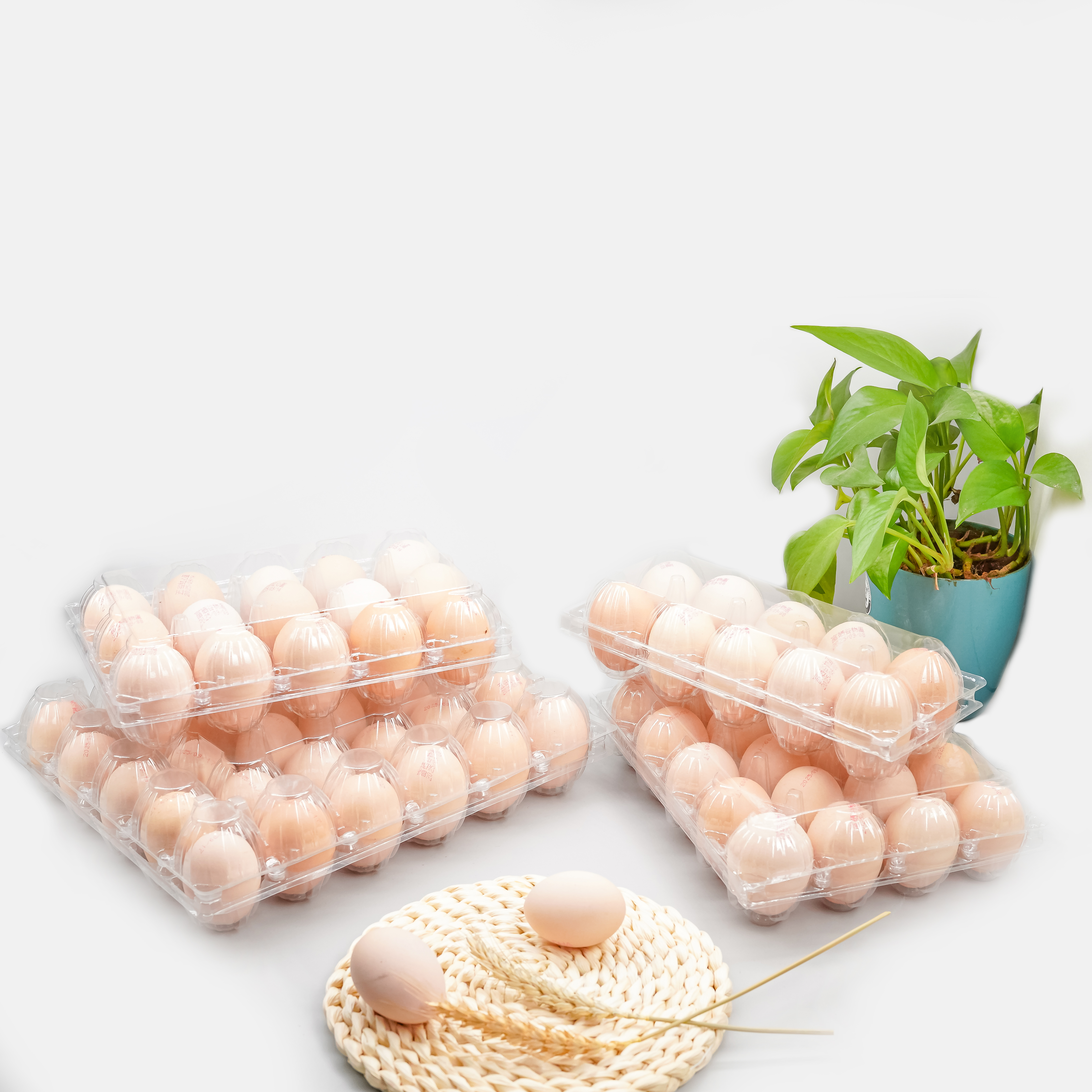
The 18-count format is well established in North American grocery retail, particularly in discount and warehouse-adjacent channels. It appeals to larger households and high-frequency egg consumers, and supports a lower per-egg price point while maintaining a reasonable total ticket price. From a retailer's perspective, 18-count cartons reduce replenishment frequency relative to 12-count, lowering labor cost per unit sold.
For packing centers, the 18-count tray typically runs efficiently on medium-capacity lines and is compatible with a wide range of PET tray structures, including flat-panel label areas suitable for date coding and batch labeling.
20 and 24-Count Cartons
The 20-count and 24-count formats serve similar channel functions but differ slightly in target audience. The 20-count is more common in markets where metric or even-number formats are preferred, while the 24-count has stronger traction in food service procurement and club-store retail where buying in multiples of a dozen retains consumer familiarity.
Both formats share a common challenge: shelf depth. In standard supermarket gondola configurations, 20 and 24-count trays frequently exceed the standard shelf depth, requiring either a dedicated deep-shelf allocation or a landscape-orientation placement that reduces facing count. Procurement buyers should confirm shelf compatibility with retail partners before standardizing on these formats for grocery channels.
Wholesale and Bulk: 30 Count
The 30-count tray occupies its own operational tier. It is not a retail consumer format — it is a distribution and wholesale format, used primarily by farms supplying food service accounts, institutional buyers, hotel and restaurant procurement departments, and egg repackers who receive bulk product and portion it into smaller retail units.
From a packaging efficiency standpoint, the 30-count tray offers the lowest packaging cost per egg. Material usage per cavity is reduced, handling steps per unit are minimized, and pallet configurations can be optimized for higher stack density. For high-volume packing operations running automated or semi-automated lines, the 30-count tray often represents the most cost-effective format per unit throughput.
However, the 30-count format is a poor fit for direct retail without an intermediate repackaging step. Consumers do not typically purchase 30 eggs in a single transaction outside of bulk club retail, and the tray format — often open-top or fitted with a separate PET lid — is not designed for individual consumer handling.
Farms and distributors operating hybrid channels (direct-to-consumer alongside wholesale) should maintain separate SKU specifications for 30-count wholesale trays and their consumer-facing retail formats.
Selection Matrix by Sales Channel
The following table maps egg carton count sizes against primary sales channels, replenishment frequency, and display format to support packaging specification decisions.
| Farm shop / direct sales | 6, 12 | High (2–3×/week) | Small table display, gift-friendly |
| Farmers' market / event | 6, 10, 12 | Per-event restocking | Portable, stackable, low footprint |
| Independent grocery | 12, 15 | Daily to every 2 days | Standard gondola shelf |
| Supermarket / chain retail | 12, 18 | Daily | Planogram-controlled facing |
| Warehouse / club store | 18, 24 | Weekly | Deep shelf, bulk orientation |
| Food service / restaurant | 20, 24, 30 | Weekly | Case purchase, no consumer display |
| Wholesale / distributor | 30 | Contract-based | Pallet stack, no retail shelf |
| Online / DTC e-commerce | 6, 12 | Per order | Box-within-box; shipper fit critical |
FAQ
Q: Can the same PET tray mold be adapted for different count formats? Not in most cases. Each count format requires a dedicated mold configuration, as cavity count, tray geometry, and footprint dimensions are structurally distinct. Suppliers with 600+ standard mold configurations can typically offer immediate tooling for the most common formats (6, 12, 30) without custom development.
Q: Which egg carton count sizes are best suited for automated packing lines? 12-count and 30-count formats have the broadest compatibility with automated and semi-automated packing equipment. Less common formats such as 10, 15, or 20-count may require lane reconfiguration or tooling changes. Confirm compatibility with your equipment supplier before committing to a non-standard count format.
Q: Does count format affect cold chain storage efficiency? Yes, indirectly. Larger count formats (18, 24, 30) allow higher per-pallet egg counts with fewer packaging units, which can improve cold storage utilization. Smaller formats increase packaging material volume per egg, which may slightly reduce pallet density.
Q: How should I decide between 12 and 15-count for a new retail launch? Default to 12-count unless your retail partner's planogram explicitly accommodates 15-count or you have confirmed consumer demand data favoring the format. The 12-count format offers broader shelf compatibility and easier planogram integration, particularly for new brand listings where shelf negotiation is still in progress.